Sol Rolls out Resources for Spanish-Speaking SREC Customers
Company News |
By The Sol Systems Team
In honor of Hispanic Heritage Month, Sol Systems’ SREC team has launched a new Spanish resource center for our SREC customers.
Solar renewable energy credits (SRECs) are fairly complex. So,
when communicating with Spanish-speaking customers, Sol’s SREC customer service
team has faced difficulties answering questions, and until now, has not had any
translated resources to share. At Sol, we are high touch, so we wanted to do
more for our Spanish-speaking customers so they would feel comfortable reaching
out with questions, and so that installers would confidently send
Spanish-speaking customers to Sol Systems.
Our Solution
Sol’s SREC team is taking the first steps to provide helpful
Spanish language services. We are translating our most frequented and important SREC Help Center* articles,
and now have customer service representatives that speak Spanish. Moving
forward, the team will continue to offer help center articles in Spanish for a
more complete set of resources.
"We’re committed to helping break down barriers that prevent Hispanic communities from accessing solar energy,” said Kate Brandus, Director of SREC Asset Management at Sol.
We encourage customers and installer partners alike to
contact us in Spanish when they need assistance with their SRECs.
*In March 2020, the Sol Systems SREC team rolled out Zendesk, a customer service software that offers call and email management and a website platform for posting helpful content like tutorials, FAQs, and SREC-related articles. The ability to have resource centers in different languages is among the more exciting features of the Zendesk platform.
It’s National Customer Service Week! This week, we recognize and celebrate excellent customer service. To pay homage to our dedicated customer service team at Sol Systems, we are launching our Service Spotlight Series! This interview series will provide the opportunity for our customers and partners to get to know their customer service representatives and learn about what goes into serving our 15,000 customers each day. The start of our series features Abbie Borowski, an SREC Customer Operations Analyst at Sol Systems.
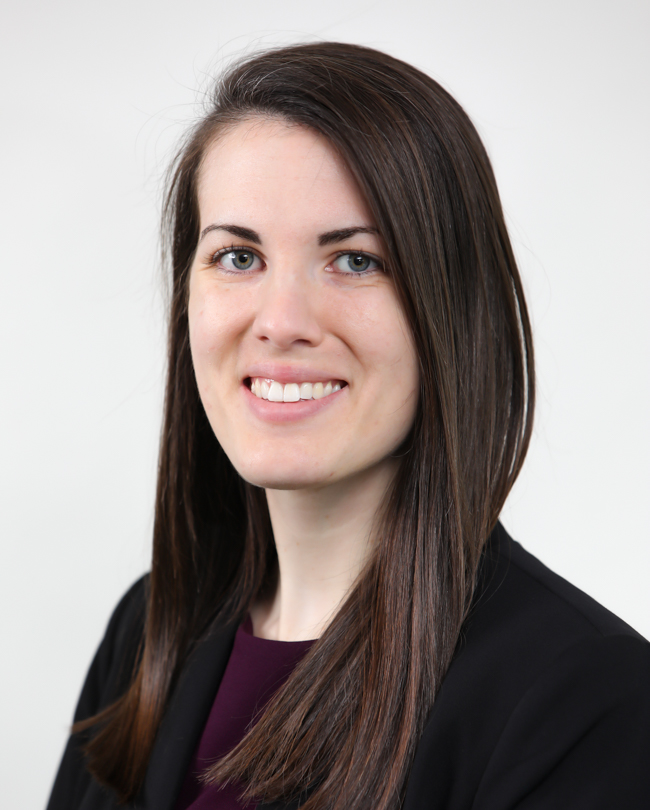
Abbie Borowski is an SREC Customer Operations Analyst at Sol Systems.
1. What brought you to Sol Systems?
I’ve always had an interest in being a part of the renewable energy industry. Right after college, I was the Assistant Director of an Upward Bound program in Vermont, where I worked with first-generation, college-bound high school students from modest-income backgrounds. This was an incredibly rewarding job, but as I was helping each student chase their dreams, I knew I was not fully chasing my own. I decided to leave that role for an entry level sales position with a solar installation company in Maryland. After a little while I ended up leaving the sales team and moved over the operations side of the business, quickly realizing it that was where I wanted to be all along. Under my prior role, I was responsible for maintaining customer relations and installation timelines. I loved it! However, I wanted to explore renewable energy credit (REC) trading and post permission to operate (PTO) processes. Eventually, I saw an advertisement for a SREC Analyst position in DC and applied. I ended up getting the position with Sol Systems in 2019. The experience I gained from my time working for a solar installer provided an excellent foundation for me to transition into my current role at Sol Systems.
2. What sparked your interest in renewable energy?
I went to school for Sustainability Studies. My program was a broad scope of how to apply sciences to world sustainability practices. I was a first-generation college student and obtained a lot of support from my peers and professors to excel my professional development in this field. I knew I wanted to be in the renewable space and was able to drill that interest down further to find that I wanted to specifically be in the solar industry. I am fascinated by alternative energy sources and the different relationships they have with the utility grid.
3. Why do you like working in SRECs specifically?
SRECs are a unique sector of the solar industry that most people may not know much about. This type of work is fast pace and ever changing, from the Trading Operations to understanding the intricate policy of each SREC market, I still learn new things every day. Another interesting aspect of our customer relationship is that we pay customers, they don’t pay us. Our goal is to provide excellent service every step of the way.
4. What's your favorite part of working on a customer service team?
My favorite part about my role specifically is working on account maintenance and being a part of every process that must happen on the back end for a customer to receive their SREC payment. Along with that, our team structure is stellar we all work together wonderfully and have excellent leadership to guide us. All the tasks we execute daily are a part of a bigger picture and it is very rewarding to see our team accomplish major milestones along the way.
5. Outside of Sol Systems, what do you like to do for fun?
I love to knit; I love everything about it – the different yarn options, the diverse patterns, the joy you get when you finish a project, everything! I also enjoy cycling and running. I strive to take advantage of anything I can do outside.
ABOUT SOL SYSTEMS
Sol Systems is a leading national solar energy firm with an established reputation for integrity and reliability across its development, infrastructure and environmental commodity businesses. To date, Sol has developed and/or financed over 850 MW of solar projects valued at more than $1 billion for Fortune 100 companies, municipalities, counties, utilities, universities and schools. The company also actively shapes and trades in environmental commodity and electricity markets throughout the United States. The company was founded in 2008, is based in Washington D.C, and is led by its founder. Sol Systems works with its team, partners, and clients to create a more sustainable future we can all believe in. For more information: www.solsystems.com
Did you know that you can monetize the energy produced by your solar facility in addition to savings on your electric bill? Sol Systems can broker your SRECs to help you get the most out of your solar investment.
What is an SREC?
Renewable energy credits, or RECs, are commodities that you earn for producing solar energy directly from your rooftop system. RECs from solar are called solar renewable energy credits, or SRECs. SRECs and RECs are awarded each time an energy resource reaches a specific amount of energy production, generally 1,000 kilowatt-hours, so average residential rooftop systems generally produce between 4 and 12 SRECs a year.
SRECs are driven by state incentive programs, so SREC values vary on a state-to-state basis each with a fluctuating market value so it’s important to partner with a trustworthy aggregator with the right expertise.
Why Sol Systems?
Sol systems is a leader in SREC aggregation and has built sophisticated systems to optimize SREC values. At Sol Systems, we pride ourselves as sophisticated market movers. Our headquarters in Washington, DC drives our authenticity and locality on the East Coast. Registering your SRECs with Sol Systems guarantees:
Best in class customer service
Highest available SREC values
Complimentary state registrations
A trusted partner engaging directly with SREC compliance buyers
Market insights based on our analysis of supply, demand, and legislation
A team with holistic knowledge of solar finance and energy markets
How do I register my SRECs through Sol Systems?
We are here to guide you with easy to follow steps on how you can start generating additional income through your SRECs:
Installer required to verify system specs. (In some cases, Sol Systems can verify)
Sol Systems generates contract.
Review, sign, and return contract with interconnection agreement and supplemental documents.
Sol Systems sends email to customer to confirm system has been registered with the state.
Sol Systems tracks monthly meter readings (production data), and emails customer for manual meter readings only if needed.
PAYMENT! - Customer receives payment from Sol Systems based on system production (paid quarterly in the months of February, May, August, and November).
Payment arrives as a paper check by default, unless the customer selects electronic payment.
Why Solar for Water and Wastewater Treatment Facilities?
Renewable Energy Procurement |
By The Sol Systems Team
Water and wastewater facilities are vital to the success and growth of surrounding communities.However, powering these facilities requires a tremendous amount of energy, consuming 4% of all energy used in the US. To free up budgets and make use of excess land, water and wastewater facilitiesare well poised to utilize solarenergy to power their plants with low cost, clean energy.
Why Solar for Wastewater?
High Electricity Usage? No Problem.
One of water and wastewater treatment facilities’ biggest expenses is energy. Oftentimes, an on-site solar system can help reduce that expense by generating energy at a lower cost than the incumbent utility. Not only does solar provide low-cost energy, it also provides long-term cost certainty through power purchase agreements (PPA). Through this agreement, Sol will build, own, and operate a solar energy plant at the water or wastewater treatment facility, allowing the facility to simply buy all electricity generated by the solar system at a fixed rate lower than the current cost of electricity. Through this, the facility benefits from savings on its electricity bills from day one of system operation with no upfront costs.
Generate Clean, On-Site Energy
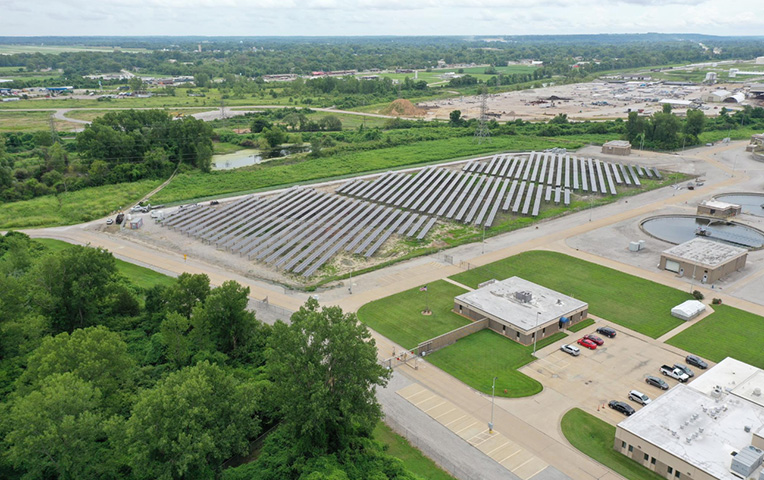
Beyond high energy usage, solar and water are a successful pairing because these facilities often have the land requirements necessary to build a solar project of appropriate scale. Historically, many water and wastewater facilities purchased additional land beyond their required footprint to serve as a buffer between the plant and anyneighbors,makingthe land a perfect site for a solar energy system. Sol has built projects for water and wastewater treatment plants on parcels as small as 5 acres, but sees the best results for projects that are 10 acres and larger.
What makes Sol unique?
Because of our extensive and proven work with water and wastewater treatment facilities, Sol Systems understands the technical aspects of treatment facilities, including electrical infrastructure and underground equipment. Through Sol’s power purchase agreement, we will pay for all development and construction, while the facility locks into a low electricity cost for a period of 15 to 25 years.
Interested in learning more about the opportunities of solar and wastewater? Check out our wastewatercase study or fill out the intake form below.
Uncovered Opportunity – Why New York Parking Lots are Potential Cash Cows
Renewable Energy Procurement |
By The Sol Systems Team
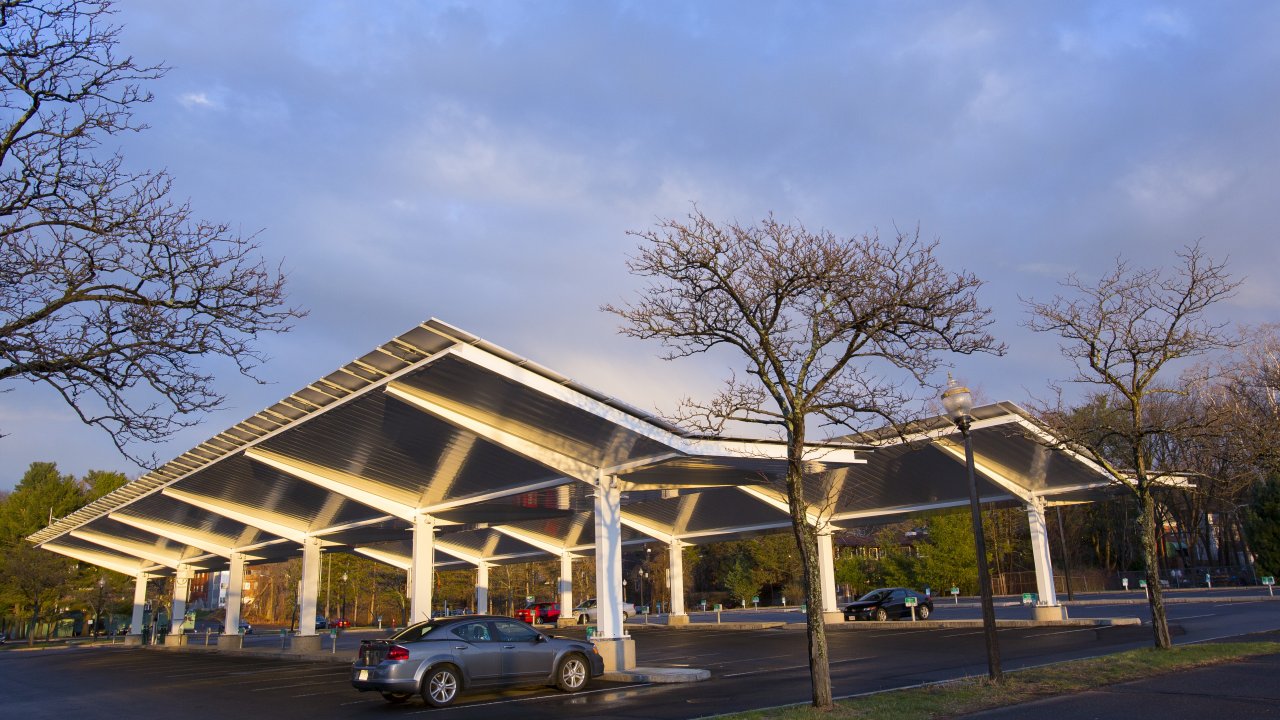
As any New Yorker knows, clean energy has been a priority for Governor Andrew Cuomo’s administration. However, not every New Yorker knows that thousands of parking lots in ConEdison territory have the potential to receive a substantial lease payment for converting their uncovered parking lots to covered, solar-producing cash cows! Not to mention offer cars with free shade and weather protection.
Forget Energy, Space is Your Asset
Traditionally, when a solar developer like Sol calls your number, we’re looking for customers with space and energy usage to both host a solar energy system and consume the energy it produces. In New York, however, the state’s community solar program allows parking lot owners to lease out their space for solar carports (also known as solar canopies) without requiring the energy load to use it. Through community outreach and engagement your project will find energy buyers from a large array of opt-in subscribers. An added incentive program, specifically for solar carports in ConEd territory, allows parking lot owners to generate lease revenue simply by giving that solar project a place to live.
[caption id="attachment_5723" align="alignright" width="300"] Solar canopies provide free shade while preserving the parking lot's utility.[/caption]
The Only Shady Thing About It
Unlike land or rooftop solar systems, carports effectively retain all utility of the space they are leasing, as cars simply park under the canopies. This also means that cars have reliable cover for shade in the summer, rain in the spring and fall, and snow in the winter. It’s rare that real estate owners have a chance to get paid to add physical benefits to their properties, but New York provides an exception.
How Do I Get Started?
Owners of large parking lots or real estate in ConEdison territory, or those who are interested in assessing their company or organization’s opportunity to take advantage of the current state incentives, can reach out to Sol in the contact form directly below, or send us an email directly at energy@solsystems.com. We’ll get back to you shortly.
Miles Braxton Wins Clean Energy Leader Institute 2020 JEDI Award
Company News |
By The Sol Systems Team
On August 29th, Miles Braxton, Business Development Associate at Sol,received the Clean Energy Leadership Institute (CELI) Justice, Equity, Diversity, and Inclusion (JEDI) award. This prestigious and outstanding award is given to an individual that inspires other clean energy leaders to constantly feel empowered, make a lasting difference, and build a better, clean energyfuture.
[caption id="attachment_7180" align="alignright" width="214"] Miles Braxton is a Business Development Associate on the Sol Customer Solutions team.[/caption]
The award was given through the emPOWER20 conference held by the Clean Energy Leadership Institute, featuring a series of clean energy subject matter experts focusing on equity and investing in a clean energy future for all.
Miles began speaking publicly about clean energy a year after graduating from the University of Virginia,following an inspiring conversation with Sean Bogle, Assistant Dean of School Affairs for the Yale School of Environment.From there, Miles started his collegiate speaker series focused on fostering diversity as aclean energy advocate.
Over the past year, Miles has spoken at severalprestigiousuniversities including Columbia, Duke, UNC Clean Tech Summit, and USC. His mission is to empower young, BIPOC to navigatetheir own career path andachieve their goals through the clean energy space. In addition, Miles is working on an exciting project to further help empower and continuously engagewith young leaders in all energy fields and environmental attributes.
With this award, Miles will continue to empower young professionals to pursue their aspirations and take the first step towards to achieving those goals.



 Miles Braxton is a Business Development Associate on the Sol Customer Solutions team.[/caption]