Agrivoltaics in Practice: An Interview with Juliana Isaac
Insights |
By Catherine Heiger
For those newer to the concept, how do you define agrivoltaics in practice?
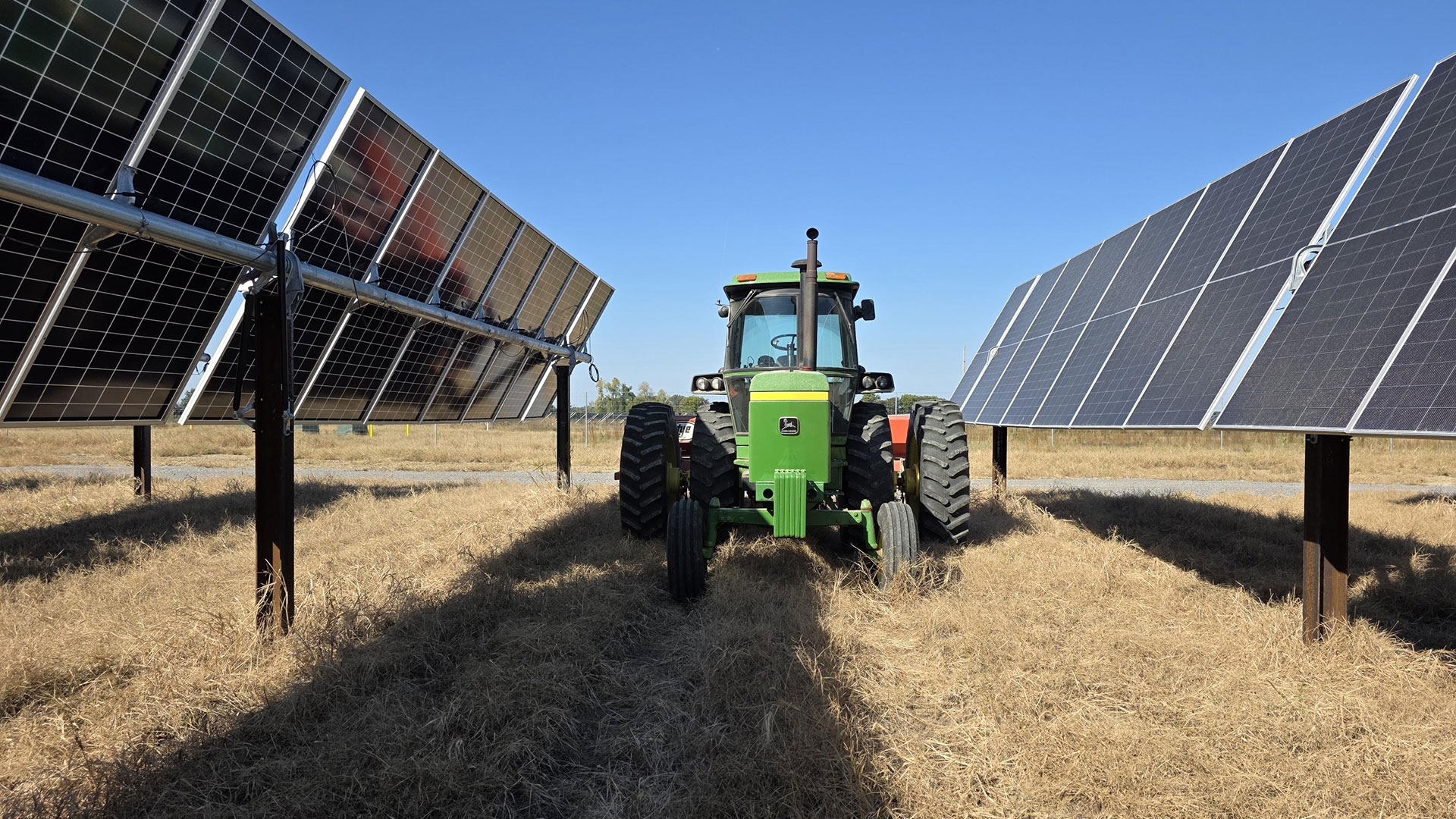
Agrivoltaics is about designing solar projects that enhance the agricultural character of the land. In practice, that means emphasizing dual uses of solar land, whether that’s grazing, co-locating solar with agriculture, or crop production, so the land continues to be productive. It’s a site-specific approach that balances energy generation with long-term land stewardship.
How are agrivoltaics opportunities developed?
We start by evaluating the land around us - understanding what was farmed before, what the agricultural and food landscape looks like in the region, what is meaningful and impactful to the community and landowners, and more. We look at how best to preserve soil health, maintain flexibility for future use, and ensure the land remains productive - all while producing solar energy. Our goal is to design projects that align with those priorities, not override them.
How are partnerships with local organizations shaping innovation in agrivoltaics?
Partnerships are essential. Universities help us test and validate what works in different environments, while local organizations bring critical knowledge about the land and community. Our partnership at Eldorado was born out of what we learned with academic and research partners - and now, we’re growing crops and teaching high school students about agricultural business. Together, these collaborations turn agrivoltaics from a concept into a continuously improving practice grounded in data and real-world experience.
How do you think the industry will continue to scale agrivoltaics over the next 5-10 years?
Scaling agrivoltaics will depend on proving both its economic and environmental value. That means better data, clearer policy frameworks, and continued collaboration between developers, farmers, and researchers. As more projects demonstrate success, agrivoltaics can become a standard approach. At Sol Systems, our goal is to include agrivoltaics on every project we build.
How is Sol Systems’ approach to agrivoltaics unique?
At Sol Systems, agrivoltaics is part of a broader commitment to responsible development. We prioritize long-term land stewardship and community impact alongside clean energy deployment. That means investing in relationships, tailoring solutions to each site, and ensuring projects deliver real benefits to the communities where they’re built.
Agrivoltaics in Action: How Sol Systems Is Rewriting the Future of Land, Energy, and Agriculture
Insights |
By The Sol Systems Team
For years, the clean energy transition has been framed as a tradeoff, energy vs. land, infrastructure vs. agriculture, climate progress vs. community priorities. Sol Systems is proving that’s a false choice.
Across the country, particularly in Southern Illinois, Sol has been building a new model: agrivoltaics at scale, where solar energy and agriculture don’t compete for land, but actively strengthen one another.
A Track Record of Real Projects, Not Pilots
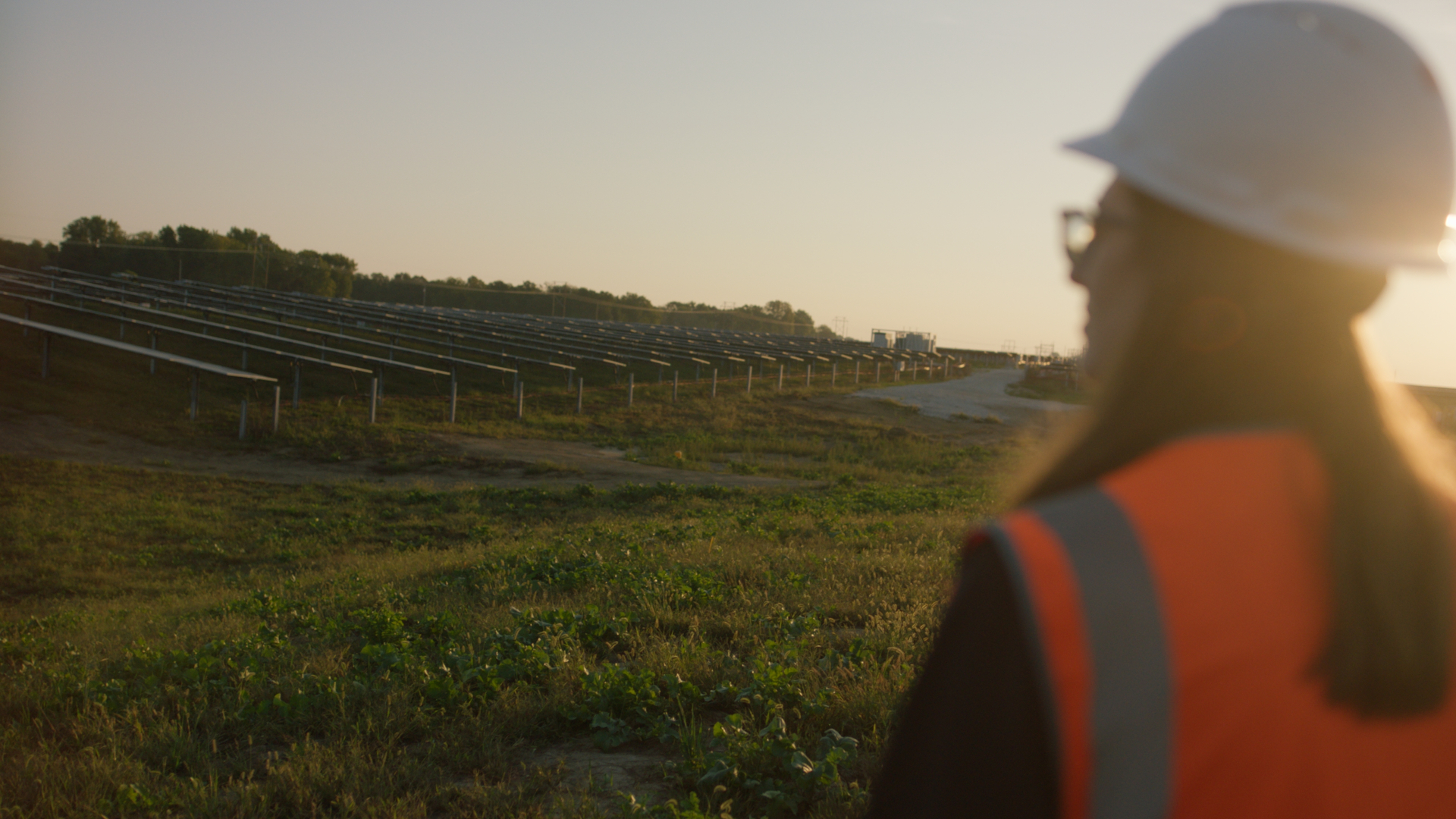
At the center of this work is the Eldorado Solar Project in Saline County, Illinois, a 342 MW facility and one of the largest agrivoltaics projects in the United States.
Developed with partners including American Farmland Trust, Food Works of Southern Illinois, Nextpower, and SOLV Energy
Integrates the farming of Kernza®, a deep-rooted perennial grain, and specialty crops, like fruits and vegetables, grown directly beneath solar panels
Designed to improve soil health, water retention, and long-term farm viability and create economic opportunities for experienced as well as new and beginning farmers
Eldorado is a working proof point that row-crop and specialty-crop agriculture and utility-scale solar can coexist meaningfully at scale, complemented by pollinator habitats and livestock grazing. And it’s not alone.
At Prairie Creek in Morgan County and Tilden in Randolph County, Sol has implemented sheep grazing to manage vegetation while creating new revenue streams for local farmers
Furthermore, at Tilden in Randolph County, Illinois, Sol transformed a former coal mine into a 186 MW solar project, part of a broader portfolio of dual-use solar projects developed in partnership with local stakeholders and landowners
Together, these projects show that agrivoltaics is a flexible toolkit that adapts to crops, livestock, and land conditions.
Built Through Deep Partnerships
Sol’s emphasis on partnerships enables innovative research and development to support dual-use solar.
American Farmland Trust is advancing research on soil health, crop productivity, and land stewardship
The Land Institute is enabling the cultivation of regenerative crops like Kernza®
Local farmers and landowners are ensuring projects support working lands, not displace them
Food Works is training beginning or transitioning farmers in sustainable farming to create a pipeline of farmers focused on addressing food insecurity in their local community
Industry partners like Nextracker and SOLV Energy are engineering systems that enable agriculture and energy to function together
These collaborations turn solar sites into living, learning test beds, generating data and models that can be replicated nationwide.
Why Agrivoltaics Works
Sol Systems’ work demonstrates three core truths about agrivoltaics:
1. It Protects and Enhances Agricultural Land
Perennial crops like Kernza reduce tilling, improve soil structure, and capture carbon, while grazing and pollinator habitats support biodiversity and long-term land productivity
2. It Strengthens Rural Economies
Projects like Eldorado deliver:
Long-term tax revenue (tens of millions over project life)
Committed, long-term funding for schools, food programs, and community organizations
Local jobs, expanded career pathways, and long-term economic opportunities
Access to locally grown food delivered to schools, hospitals, and the larger community
3. It Unlocks Siting at Scale
By making solar compatible with agriculture, agrivoltaics reduces land-use conflict, one of the biggest barriers to deploying clean energy quickly and responsibly.
From Concept to Replicable Model
For nearly a decade, Sol Systems has been advancing agrivoltaics from early-stage experimentation to utility-scale deployment.
Eldorado proves that:
Agrivoltaics can work with row crops, not just grazing
It can scale to hundreds of megawatts by leveraging a menu of options
It can deliver measurable benefits for farmers, communities, and the grid
Or, as Sol’s leadership has framed it: this is about showing that solar and agriculture don’t just coexist, they thrive together.
The Bigger Picture
As energy demand grows, driven by electrification, AI, and data centers, the U.S. faces a critical question: How do we build the energy infrastructure we need without sacrificing the land and communities we depend on? Agrivoltaics is one of the most compelling answers. And Sol Systems isn’t just talking about it, we’re building it, refining it, and proving it works in real communities, on real land, at real scale, with real results.
How Agrivoltaics and a 20-Year Community Investment Are Creating a Field of Opportunity
Insights |
By Catherine Heiger
Solar projects are often talked about in terms of megawatts and transmission lines. But what really matters is what happens on the ground and in the communities where these projects are built.
One of the most exciting parts of this project is the agrivoltaics work happening beneath the panels. In partnership with researchers, community organizations, and local farmers, the site is exploring how agriculture and solar can share the same land, including growing Kernza®, a perennial grain, in partnership with American Farmland Trust and specialty crops in between rows of solar panels, in collaboration with Food Works of Southern Illinois.
Agrivoltaics is still an emerging idea in the U.S., but it has enormous potential. It allows farmland to stay productive while also generating clean electricity, helping rural communities benefit from both agriculture and energy.
Turning that vision into reality requires us to navigate complexity and deliver projects that work for both land and community.
As Dan Shugar, CEO of Nextpower, puts it: “We are thankful for Sol's partnership at Eldorado, showing how agrivoltaics and advanced solar technology can deliver lasting community benefits.”
Projects like Eldorado also show how important partnerships are to getting projects built, from technology providers to construction partners to local leaders.
George Hershman, CEO of SOLV Energy, the project's Engineering, Procurement, and Construction (EPC) partner, explains it simply: “Successful projects come together when trust runs both ways – and that’s exactly the relationship we’ve built with Sol Systems.”
And for the local school district, this project represents more opportunities and brighter futures for students. Eldorado Schools Superintendent Cody Cusic says, “It’s not a field of solar panels. It’s a field of opportunity – for our students, community, and county.”
This video is part of our broader effort at Sol to show what responsible solar development looks like in practice and lead the way for others.
Earlier this year we told the story of repurposing a historic mine site into a solar project at Tilden, IL, and what that has meant to the local community.
Last year, we shared a look at community partnerships in Morgan County, IL – the host of our 37MW Prairie Creek Solar Project. This video highlights Sol’s long-term commitment to Lincoln Land Community College, Faith in Place, Morgan County 4-H, and Jacksonville Promise.
Each project is different, but the idea is the same: clean energy projects should strengthen the grid, empower communities, and revitalize land for decades to come.
Clean energy is ultimately about building infrastructure, but we cannot do that without caring for the land, the people, and the places that host these projects for decades. The more we can show how those relationships work, the lessons we’ve learned along the way, the better the future of clean energy will be for all of us.
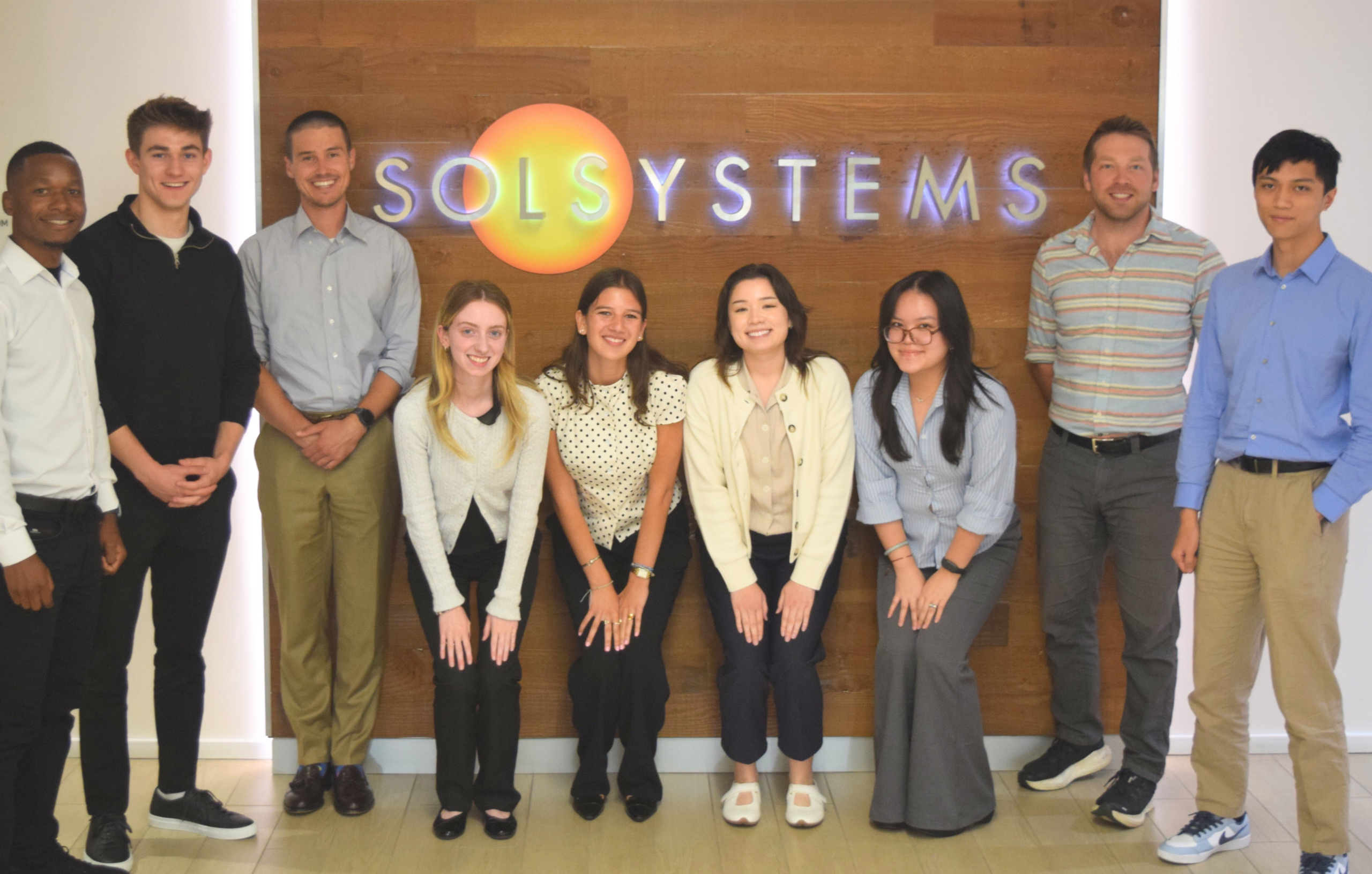
With the kickoff of our internship application cycle, we’re reflecting on something we see year after year: internships at Sol aren’t observational. They’re foundational.
Many of our former interns are now building portfolios, shaping Sol strategy, and driving impact across the company. Meet four Solsters whose internships shaped their careers and learn why they chose to stay.
Kristen Cugini
Enterprise Intern → Portfolio Manager, Commercial Asset Management MBA, University of Virginia Darden School of Business
Kristen began her Sol journey on the Enterprise team, focused on connecting with customers. Today, she works on the Commercial Asset Management team as a Portfolio Manager, supporting operational projects across our fleet.
“I felt that I was given a lot of ownership and responsibility in my internship role, and that’s helped me to be more confident as a full-time employee,” she shares.
Her path has taken her from the front end of the business to the operational core—an evolution that’s given her a unique perspective on how Sol’s work comes together.
“My internship and full-time roles are on opposite ends of the company. It’s been really interesting to see how the work on the Enterprise side flows through and impacts day-to-day operations.”
Her advice to future interns is simple: lean in.
“You will learn a ton in a short period of time. Come ready to ask questions and connect with people across teams. You can make a real impact here. Find what interests you and ask to explore it further.”
Juliana Isaac
Development Engineer Intern → Director, Sustainability & Ecosystem Impact Bioresource Engineering, McGill University
In just three months as an intern, Juliana saw something that made her want to return: a company full of people deeply committed to their work.
“It was clear to me that Sol is full of mission-driven, passionate people who really care about what they’re doing.”
Now serving as Director of Sustainability & Ecosystem Impact, Juliana continues to innovate in an industry that never stands still.
“I’ve been lucky in all of my roles at Sol to be able to innovate. It’s special to work at a company where creativity is encouraged and supported from the top down.”
For Juliana, the future of solar is defined by that same spirit.
“The industry is always evolving. Innovation is a key part of its future, and it makes it easy to come to work every day excited about what we’re building.”
Her advice to prospective interns: “Soak it all in. Ask questions, read as much as you can, and stay curious. You have access to some of the brightest and most passionate minds in the industry, so make the most of it!”
Brendan Conley
Business Development Intern, Origination (SCS) → Senior Associate, Asset Management BA in International Affairs & MS in International Business, George Washington University
Brendan’s internship began in Origination, where he worked on distributed generation proposals and pipeline development. Today, as a Senior Associate on the Asset Management team, he manages operational projects, including some that trace back to his intern days.
“One of my favorite projects as an intern was the Urbana Champaign Sanitary District proposal, because we won it,” he says. “In origination, most projects don’t pan out. It was rewarding to see something tangible come from the work.” Brendan remembers the pride of contributing to the initial layout and financial model.
His role has evolved alongside the company’s growth. “As an intern, I worked on originating our distributed generation pipeline. When I joined Asset Management full-time, my first portfolios included those now-operational projects. Now, I work exclusively on our utility-scale projects in line with Sol’s goal to be a clean energy IPP.”
Beyond the work, Brendan points to culture as a defining part of his experience, from project wins to volleyball games and tubing trips.
“As an intern, I found the team to be extremely passionate, knowledgeable, and mission-driven. It was commonplace to grab a coffee with someone to learn about what they were working on.”
Adil Javat, CFA
Asset Management Intern → Director, Structured Finance BA in Economics, Johns Hopkins University
Adil joined Sol as an intern on the Asset Management team. Today, he helps lead transaction execution and capital raising efforts on the Structured Finance team.
Early in his internship, one thing stood out: the level of trust.
“Even as an intern, I was given the opportunity to take on meaningful responsibility, including supporting some investor-facing work,” he says. “That confidence early on made a strong impression and encouraged me to make the most of the opportunity.”
After returning to Sol full-time, Adil expanded his experience across the business before transitioning into Structured Finance.
“In my current role, I’m actively involved in structuring and closing transactions that help power the growth of clean energy infrastructure, combining financial insight with growing technical expertise to turn investment strategies into real-world impact.”
For Adil, the industry’s constant evolution is what makes the work especially exciting.
“The solar industry is shaped by the interplay between policy, capital markets, and growing power demand. Delivering resilient, bankable assets amid regulatory change and market uncertainty is both complex and rewarding.”
Our former interns are now helping us finance, build, and manage the infrastructure that powers communities across the country. And they started by asking questions, building models, joining cross-team conversations, and raising their hands.
Interested in starting your own Sol story? Internship applications are now open.
Sol Systems and Food Works of Southern IL welcome Sol Farm Manager, Morgan Schmitt
Insights |
By Catherine Heiger
Through the Eldorado Impact Program, Food Works of Southern IL is leading the charge of growing crops under the panels of the Eldorado Solar Project. We sat down with Morgan Schmitt, Food Works’ Farm Manager to learn more about her background and what she’s looking forward to at the Sol Farm on at the Eldorado Solar Project.
Q: Where are you from?
A: I am from the small village of Equality, Illinois, just down the road from Eldorado. I actually worked in Eldorado while in high school at Big Johns!
Q: How did you get connected to Food Works?
A: In my last semester at Southern Illinois University, I went to visit Dr. Leslie Durham during her office hours to talk about plans after graduation, knowing I wanted to work in a setting that valued local foods and sustainable agriculture. Dr. Durham connected me with a couple of farmers in the area, as well as the non-profit organization Food Works of Southern Illinois. Food Works was hiring a Kids Club Coordinator for the upcoming Winter Farmers Market season. After meeting with the team, it truly felt meant to be. Since joining the team over a year ago, I have I have done an array of jobs with Food Works, including running the Mobile Farmers Market Truck throughout the Southern Illinois region. I am grateful for Food Works and the work they do, and even more grateful I get to take on this new role of farming in an area that is very dear to me.
Q: What will you be doing in Eldorado?
A: I will be working in Eldorado at the Sol Farm, thanks to a grant that Food Works received from Sol Systems. We are creating an agrivoltaics farm in Eldorado, farming in a field of solar panels. To me, it's more than just farming: I will be planting, caring for, and harvesting a wide range of vegetables, specialty crops, herbs, and flowers within the solar array so that we can simultaneously produce food in the same space as energy. The goal of this project is to grow and produce nutrient-dense local foods to sell and give away to the Southern Illinois community.
Q: What are you most excited about in this new role and working on the site?
A: I am excited about many elements of this new role. I hope we show that certain crops do very well in an agrivoltaic environment, so the information and set-up we use can be shared and implemented not only in Eldorado but all over the Midwest. I am excited to help teach other farmers what we discover at the Sol Farm; it may be our future of energy and food production. I want to live in a world where energy production and food production can co-exist in the same area to benefit the local community and environment. This project is a combination of many things I care so deeply about: local foods, the health of the environment and ecosystems, clean energy, teaching new farming methods, and community.
In 2025, alongside our partners, we advanced projects nationwide while continuing to invest in local organizations through our Impact Partners. We’re proud to share that this work translated into $2.1 million donated to 32 community organizations, supporting expanded access to education, stronger local agriculture, and reduced energy costs.
Check out our Impact Partners Year in Review:
These investments are not adjacent to our work. They are core to how we develop and deliver projects. We know the strongest projects are built through trust, collaboration, and long-term commitment to the communities they serve.
We look forward to continuing our impact work for our Tilden Solar Project, which reached COD in November 2025, marking another step forward in delivering reliable clean energy alongside durable community benefits.
Learn more about Tilden Solar, a 182MW project that sits atop a historic coal mine in Randolph County, Illinois.
In 2026, our focus remains clear: • Continuing to build projects grounded in strong local partnerships • Investing in communities for the long term, not just the lifecycle of a project • Delivering clean energy solutions that create shared value for all stakeholders
We’re grateful for the collaboration, trust, and shared purpose that defined 2025. We look forward to continuing this work together in the year ahead.