Sol Systems Sets the Standard: Beyond Carbon Neutral in 2023
Insights |
By Kristen Cugini and Jill Rathke
Sol Systems is committed to operating our business in ways that safeguard the planet and uplift people, the internal employee-led Sustainability Task Force (STF) is one example of this. STF supports the company’s ambitious carbon reduction goals – at corporate and project-level - and offers tools for employees to reduce their carbon footprint at work and home. Since 2019, Sol Systems’ STF has calculated its carbon footprint, implemented ways to reduce emissions, and developed a strategy for remaining emissions. For the past four years, Sol Systems has purchased carbon offsets for over 100% of our Scope 1, 2 and 3 GHG emissions. Most recently, we purchased 195 carbon credits from Carbon Footprint Ltd, to offset 110% of our 2023 emissions and remain carbon negative. Sol Systems has gone a step beyond just offsetting our Scope 1, 2 & 3 emissions, purchasing carbon credits that exceed our emissions to be certified as Carbon Neutral Plus by Carbon Footprint Ltd.
Energy Efficiency Carbon Credits: To address 2023 emissions, Sol Systems prioritized domestic carbon credits available through Carbon Footprint’s marketplace which meets the Quality Assurance Standard (QAS) for Carbon Offsetting. The only US-based carbon credits were from energy efficiency initiatives at the University of Illinois Urbana-Champaign. To generate these carbon credits, the university used a comprehensive approach that included launching dedicated retrocommissioning/recommissioning teams to optimize building systems, modernizing facilities through major renovations, adding high-efficiency gas boilers at its cogeneration power plant, and implementing comprehensive lighting retrofits. The funding that the university receives from its carbon credit program is reinvested into campus projects to help achieve strategic sustainability goals outlined in the university’s Illinois Climate Action Plan (iCAP).
Energy Efficiency Carbon Credits: To address 2023 emissions, Sol Systems prioritized domestic carbon credits available through Carbon Footprint’s marketplace which meets the Quality Assurance Standard (QAS) for Carbon Offsetting. The only US-based carbon credits were from energy efficiency initiatives at the University of Illinois Urbana-Champaign. To generate these carbon credits, the university used a comprehensive approach that included launching dedicated retrocommissioning/recommissioning teams to optimize building systems, modernizing facilities through major renovations, adding high-efficiency gas boilers at its cogeneration power plant, and implementing comprehensive lighting retrofits. The funding that the university receives from its carbon credit program is reinvested into campus projects to help achieve strategic sustainability goals outlined in the university’s Illinois Climate Action Plan (iCAP).
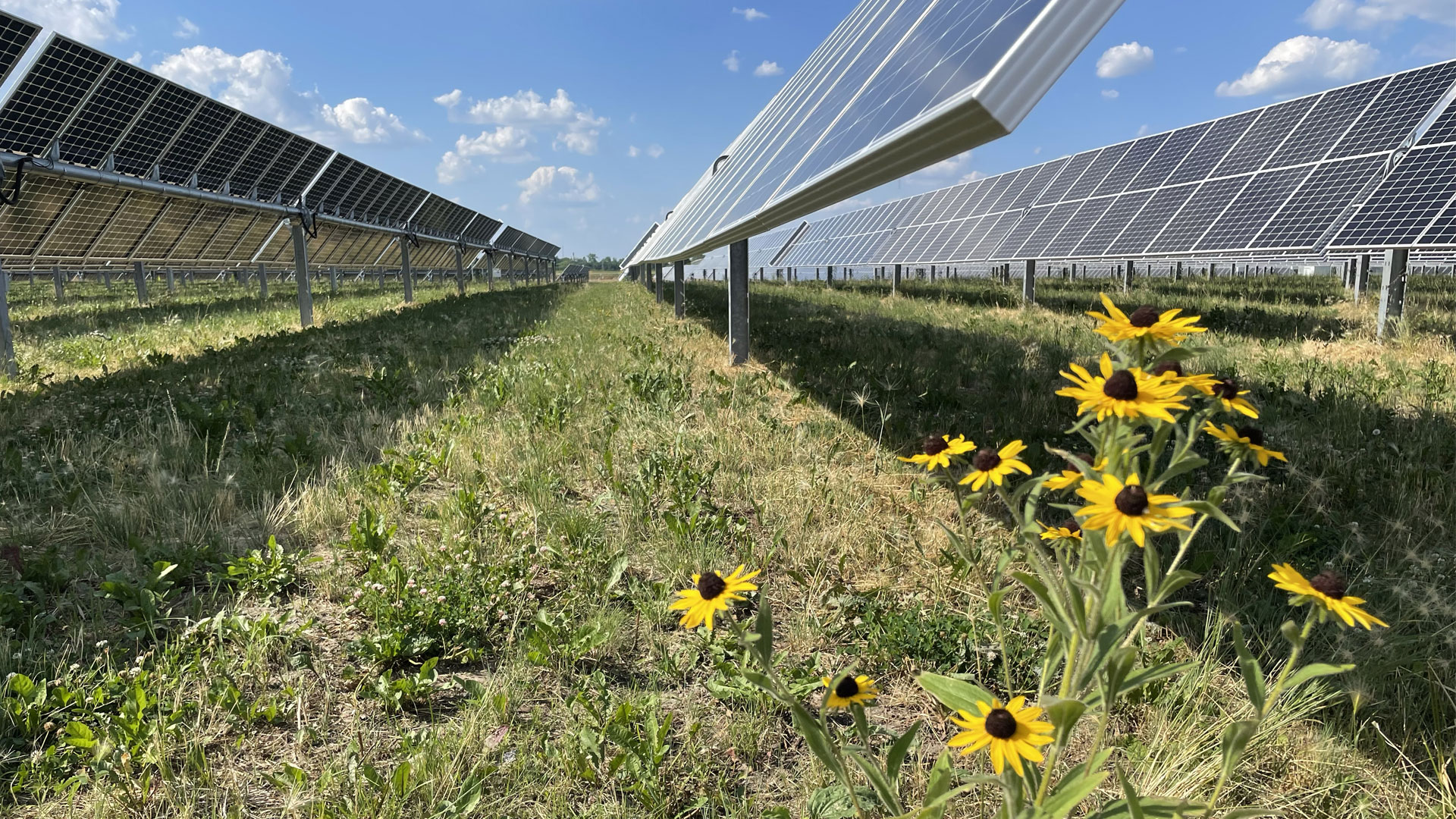
Sol Systems & The University of Illinois: Sol Systems was the project developer for the university’s Solar Farm 2.0, a 12.3 megawatt (MWdc) array. The solar farm, energized in 2021 and completed using zero waste construction methods, produces 20,000 MWh of clean electricity annually through bifacial panels and single-axis trackers. The installation supports ongoing research collaborations for pollinator habitats and agrivoltaics and hosts periodic K-12 and community educational tours.
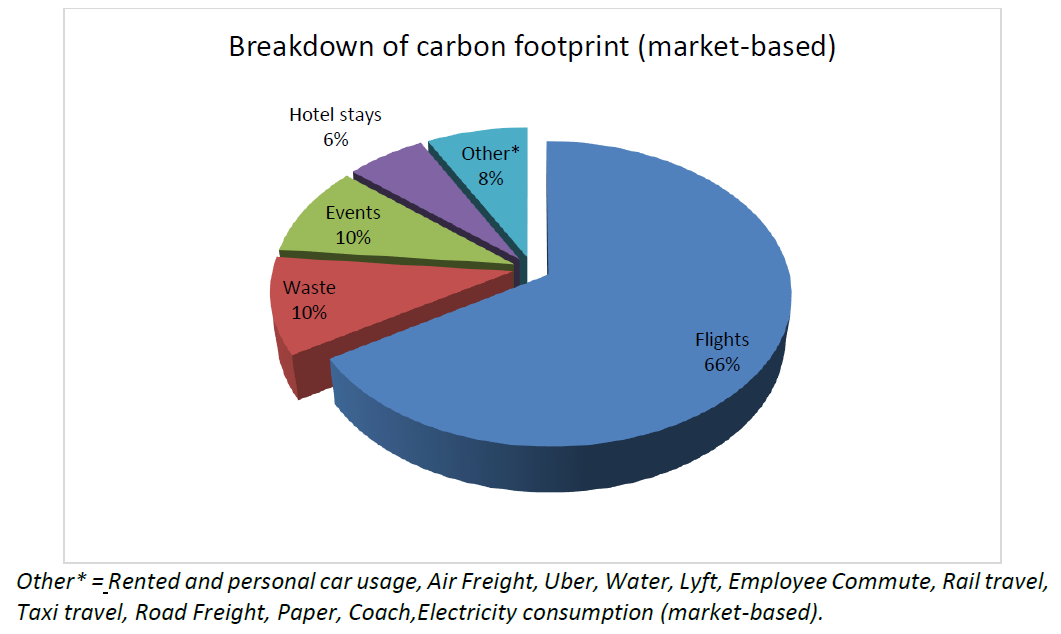
Transparency and Accountability: Sol Systems openly shares details about our carbon footprint and purchase of carbon offsets. We believe that transparency is essential in building trust with stakeholders and setting a positive example to encourage other companies to adopt similar practices. Below we have included a breakdown of Sol Systems’ carbon footprint in 2023, audited by Carbon Footprint Ltd. Business travel continues to be the majority of emissions; the Sustainability Task Force is consistently looking for ways to cut emissions here before the use of carbon offsets.
Setting a Standard for Local Community Impact: Sol Systems' work with the university on Solar Farm 2.0 and its continued focus on organizational carbon reduction goals serve as a model for other mid-sized renewable energy developers. In coming years, Sol Systems plans to find more ways to reduce our emissions and remain beyond carbon neutral by sourcing high quality carbon credits from US-based projects, prioritizing carbon reduction and removal that can be completed on our solar projects and in the communities where they are located.
Fostering Community Connections: A Conversation with Rebecca Halford, Senior Director of Community Engagement at Sol Systems
Community Impact |
By Adaora Ifebigh
Rebecca Halford is Sol Systems’ Senior Director, Community Engagement where she leads teams to develop community engagement strategies for renewable energy projects and ensures inclusive stakeholder participation. With over a decade of experience in renewable energy and climate strategy, Rebecca's career includes senior roles at AES Corporation where she led stakeholder relations in the WECC region, and at Clean Energy Collective where she managed education and engagement for community solar projects.
I hope you enjoy learning how engaging communities on infrastructure projects fosters trust through consultation and communication, influencing their success and sustainability.
How did you begin your career in renewable energy, and what do you find most rewarding about this work? What motivates you in your role as Senior Director for Community Engagement?
Before getting into solar energy, I owned a small real estate brokerage in Albuquerque, NM that specialized in land development. I had a small team, and the market was robust. However, with the onset of the Great Recession, the financial landscape shifted dramatically; banks halted lending, and my business struggled. Despite the economic downturn and numerous business closures, I noticed solar was taking off. As people began to seek energy independence and take advantage of tax incentives, I discovered an opportunity that enabled me to present to small groups like real estate brokers, teaching them about the value of rooftop solar, and showing them how they could access solar energy incentives for their homes. From this role, I transitioned to community solar and then into utility-scale solar development.
My motivation has always been rooted in the desire to share the benefits of solar energy and educate communities about the advantages of transitioning to clean energy. A former colleague used to say, “This is homegrown energy,” highlighting the local pride associated with creating energy from within communities. I am passionate about forming connections, conveying the positive impacts of solar projects, and nurturing relationships to become a trusted partner in the process.
One of the most rewarding aspects of my role is celebrating the completion of a project. These projects require extensive time and effort, from introducing project ideas to the community and developing plans for local benefits, to realizing the impact through community programs. Knowing that our team has contributed to long-term positive change through our programs is incredibly fulfilling.
Sol Systems is a renewable energy firm dedicated to accelerating America's clean energy future and investing in local communities. What role does community engagement play at Sol Systems, and how does the community engagement team collaborate with other teams to ensure the successful development and construction of solar projects in local communities?
The Community Engagement Team plays a key role within Sol Systems, working with almost all the teams at Sol from the earliest stages of project development. Our development teams rely on us to assess opportunities and identify partnerships in the communities where we intend to develop or purchase early-stage projects. We keep track of our projects to understand the community feedback around a new infrastructure project. We work with the policy team to understand regulatory frameworks that impact solar development. Our partnership with the construction team ensures that the community's experience with the project is well-managed, addressing questions and concerns and keeping residents informed about construction timelines. Whether it’s the social and economic benefits, or during construction when it can be a little bit stressful or disruptive for a short period of time within a community, we represent the community and ensure that our teams hear their voice as we go through the different phases of a project.
The Sol Systems’ Impact Team is a valuable and unique partner as we establish relationships with communities at the beginning of a project. We provide a bird’s eye view of the community needs that could translate into future economic benefits for the community once the solar projects are operational. The community engagement team’s earliest efforts shape our relationships and the impact-driven initiatives that we establish post-construction.
Some communities are passing laws to ban new renewable energy projects, while others are enacting laws to prevent local governments from doing so. How is your team navigating these challenges and working with communities to advance the clean energy transition? How do you address concerns or resistance to clean energy projects within these communities?
Engaging with communities allows the developer to understand the community’s philosophy and interest in large scale infrastructure projects. This engagement highlights the various roles within the community and how the local government is structured. By meeting people where they are—whether at townhalls, community fairs, or school meetings—we gain insight into what matters to the community and explore possibilities for collaboration.
I don't view moratoriums and ordinances for renewable energy projects as roadblocks. Instead, moratoriums can provide small governments with the opportunity to establish guidelines that ensure projects meet community needs. Outright bans on infrastructure projects can be complex, but we remain hopeful that our team can meet with the community leaders, build relationships and try to have conversations about infrastructure projects respectfully. Successful solar projects and the economic benefits that come from such projects in neighboring communities may help to lessen concerns from communities that are debating whether to pass an ordinance against solar projects or not.
Ultimately, our goal is to show communities that we support their self-determination and aim to be a long-term, reliable partner.
How do you build and maintain strong relationships with the communities where Sol Systems’ projects are located? What are the benefits of these partnerships in addressing challenges facing both the industry and these communities? What challenges have you encountered in fostering these partnerships, and how have you overcome them?
Building strong relationships begins with understanding the community's values and priorities. For example, on a recent trip to Kentucky, I met with community members and local government officials to learn about their community values—agricultural programs, education, and energy mix to name a few. Rather than imposing an agenda, we work with community contacts to identify and support initiatives that align with local values. These early connections are crucial, and their impact endures beyond project completion. Communities recognize that we listened to their needs and delivered on our commitments, which fosters trust and long-term collaboration. Once the project is complete, those early connections prevail.
We recognize there can be some opposition to renewable energy projects in any community, particularly when driven by misinformation. As we build partnerships and become a trusted advisor in the community, we want to provide them with the education needed to counter the misinformation. Our role is to empower communities with facts and build lasting trust.
With economic concerns being top of mind for many Americans, are there any policy changes or industry trends influencing your team’s community engagement approach? Do any of these give you confidence that authentic engagement can lead to economic development and land stewardship, addressing community concerns about utility-scale projects while ensuring benefits for all and leaving no communities behind?
The energy communities’ provision in the Inflation Reduction Act (IRA) is a tremendous opportunity to maximize the project impacts. Since the legislation passed two years ago, we have worked to leverage its benefits in our communities. Understanding the intricacies of the IRA and engaging in open dialogue with local officials allows us to maximize community benefits. On a recent trip to Champaign, IL, the Economic Development Director, expressed interest in funding to build out transmission in the state which would create new jobs and economic benefits for the community. Our Infrastructure + Impact approach ensures that solar projects benefit communities that are disproportionately affected by climate change. This includes initiatives related to the importance of diligent land stewardship, pollinator-friendly solar certifications, and research into the benefits of native perennial vegetation around solar project sites. Recently, Sol Systems executed an agreement with American Farmland Trust (AFT) that focuses on Smart SolarSM initiatives. Smart SolarSM, a concept service created by AFT, outlines principles to minimize the environmental impacts of solar developments while enhancing ecosystem-focused practices at solar sites. Over 2,000 acres of land from the projects that Sol Systems will develop in the next four years will participate in a research partnership with AFT to test soil health and assess the impact of beneficial vegetation.
The mission of the IRA, the growing momentum in the renewable energy sector and the interest in building deep community partnerships gives me confidence that while economic concerns remain top of mind and should be important to many Americans, we have the tools to build a clean energy economy that works for everyone.
Whether it's Illinois or Louisiana or anywhere else, we prioritize these types of partnerships and want to make sure that we return the land in the best condition possible. The IRA, the renewable energy sector's momentum, and our commitment to deep community partnerships instill confidence that we can build a clean energy economy that benefits everyone while addressing economic concerns.
Is there anything important we haven't discussed that you'd like to share with us?
Reflecting on the industry since I joined in 2010, I am continually inspired by the rapid evolution and growth in community engagement practices. Over the past decade, community engagement has become a priority with most development firms and seeing that evolution has been rewarding. We strive to build great projects and strong relationships, which help mitigate community opposition or navigate regulatory challenges.
We also aim to collaborate effectively with communities, ensuring that our efforts are valued and that we respect and integrate their values. At Sol, the emphasis on community engagement is evident in how our team’s contributions are appreciated across the company. This affirmation of our work demonstrates Sol Systems’ commitment to building meaningful relationships and identifying pathways for progress.
Eco-Friendly Energy: The Future of Solar with Sol Systems and American Farmland Trust (AFT)
Insights |
By Juliana Isaac
"Impact through Infrastructure" encapsulates Sol Systems’ dedication to fostering a sustainable energy future, one that embraces clean energy, supports communities, and promotes responsible stewardship of the land. Over the years, Sol Systems has integrated ecological restoration into our solar energy projects, demonstrating our commitment to environmental sustainability.
In our latest edition of the “Infrastructure + Impact” Spotlight Series, we highlight our collaboration with the American Farmland Trust (AFT). This national organization adopts a holistic approach to agriculture, working to propagate environmentally sound farming practices across millions of acres. The renewable energy sector is increasingly recognizing the importance of diligent land stewardship, evidenced by emerging initiatives such as pollinator-friendly solar certifications, research into the benefits of native perennial vegetation, and land stewardship seminars at industry conferences. These efforts are gaining momentum across various scales, from small installations to utility-scale portfolios.
Strategic Collaborations and Smart Solar Initiatives
This year marked a significant milestone with the execution of a Sponsorship Agreement between Sol Systems and AFT, focusing on “Smart SolarSM” initiatives. “Smart Solar”, a concept service marked by AFT, outlines principles to minimize the environmental impacts of solar developments while
enhancing ecosystem-focused practices at solar sites. AFT’s four-decade commitment to sustainable agriculture and collaborative work with farmers and ranchers forms a solid foundation for this partnership. Together, Sol Systems and AFT are set to collaborate on land stewardship and conservation best practices across Sol Systems’ utility-scale portfolio, fostering sustainable renewable energy growth.
A Comprehensive Approach to Conservation Agriculture
AFT’s method involves a comprehensive, holistic focus on conserving agricultural land, promoting eco-friendly farming techniques, and supporting the farmers and ranchers at the forefront. AFT is committed to supporting rural communities where renewable energy projects are established, aiming to forge innovative partnerships between these communities and the renewable energy sector.
Innovative Models for Community and Ecosystem Impact
Sol Systems is at the forefront of developing new models in the United States that ensure solar projects benefit under-resourced communities, those disproportionately affected by climate change, and the ecosystems surrounding the projects. As the industry continues to embrace conservation-focused initiatives, the importance of quantifying the ecological restoration outcomes at solar projects becomes crucial. Over the next four years, Sol Systems will develop utility-scale sites across the Midwest; over 2,000 acres of land from these projects will participate in a research partnership with AFT aimed at testing soil health and assessing the impact of beneficial vegetation. Starting in spring 2024, our teams will embark on a four-year journey to monitor and analyze soil health across various project sites. The data gathered will not only quantify the ecological benefits but also serve as a preliminary guide to the viability of innovative practices like crop production beneath utility-scale solar projects. This research aims to foster smarter, more conscious development and enhance community engagement with these projects.
Exploring Agrivoltaics with AFT
Our collaboration with AFT extends beyond subsurface soil health; it is above ground, too. The teams are venturing into a first-of-its-kind agrivoltaics installation project. Agrivoltaics, or the co-location of agriculture and solar, is gaining traction across the industry as one way to promote farm viability and farmland access in parallel with clean energy development. One such project in Illinois will explore the co-location of agriculture and solar energy using a portion of a utility-scale site to cultivate Kernza®, a perennial grain known for its deep roots that enhance soil stability and nutrition. This agrivoltaics initiative aims to validate the concept for both farmers and the solar industry, demonstrating the potential for mutual benefits and sustainable partnerships.
A Vision for a Smarter, Greener Energy World
Through these initiatives, Sol Systems and AFT aspire to demonstrate that solar energy and land stewardship can and should coexist to promote ecosystem health from the ground up. Our partnership exemplifies the essence of “Smart Solar” and “Infrastructure + Impact”, merging innovation, community engagement, and environmental benefits. To learn more about AFT’s Smart Solar initiatives, please visit AFT’s website at https://farmland.org/solar/.
Good Intentions, Bad Policy, and the Threat to the Clean Energy Transition
Insights |
By The Sol Systems Team
Why Additionality Should Not Be a Requirement for Corporate Clean Energy Goals
Electricity generation accounts for 25% of global CO₂ emissions, and addressing this through a transition to renewable energy sources - like solar or wind - is critical to solving the climate crisis. The good news is that corporations are stepping up to procure massive amounts of clean energy to minimize their carbon footprints, documented by retiring renewable energy certificates (RECs). The World Resource Institute (WRI) establishes the global ‘rules of the road’ for emissions accounting. But those rules – specifically its Scope 2 Guidance on indirect emissions from purchased electricity, steam, heat, or cooling – are under review to be changed, and the consequences could be catastrophic to the progress of the clean energy transition.
What’s at Stake
These new proposed rules will make accounting for voluntary purchases of renewable energy, specifically of unbundled RECs, much more challenging for corporations and threatens REC markets that are vital for the transition to renewable energy. These new rules, while well-intended, will actually slow down clean energy procurement at a time when we need it most.
Perspective from the Practitioners
Clean energy practitioners who develop, finance, build, operate, invest in, or purchase power from renewable energy projects widely agree that a more difficult process for corporations to make emissions claims is not a path forward that will bolster clean energy procurement - in fact, it will set us backward. In contrast to the proposed changes, the following principles represent a consensus among most practitioners – and the evidence included in our detailed white paper offers practical examples and explanations for why these principles should be adopted:
Market-Based Instruments are Criticaland Enabled by REC Markets: Market-based instruments, such as Virtual Power Purchase Agreements (VPPAs), or contracts that ensure the long-term financial backing of clean energy projects, and unbundled RECs, are critical to enable and motivate corporations to meet GHG emissions accounting requirements. REC markets are critical enablers for voluntary procurement. The new rules consider eliminating market-based accounting; this would discourage voluntary procurement of renewable energy.
An Additionality Requirement is Not Reasonable: A binary ‘additionality test’, or the requirement of clean energy projects to be new versus existing ones in order to “count” (as some academics propose), should not be a prerequisite for making an emissions reduction claim but could voluntarily be disclosed alongside such claim. Corporations simply won’t be able to buy as many ‘additional’ RECs, and the clean energy industry won’t be able to finance and build as many projects. Requiring additionality is a mistake and would be detrimental to the clean energy transition.
Time and Location Data Tracking is Critical: Time and location data tracking associated with customer load and renewable energy generation is essential to match, measure, and account for the underlying emissions impacts. There is broad consensus for working towards adapting GHG accounting guidance for emissionality, which reflects the avoided emissions. Renewable energy markets, particularly REC markets, will ultimately better reflect underlying carbon intensity and direct clean energy investments and procurements into carbon-intense markets where emissions reductions are most needed. Many of our recommendations to integrate emissionality into REC markets and Scope 2 requirements, shared in 2023 in our perspective on “Reimagining REC Markets,” are now being discussed for implementation.
A Better Path Forward
Continuing progress requires collaboration. We call on WRI to emphasize the practical evidence from clean energy buyers, developers, financiers, and our industry associations in the new accounting guidance so these rules support (not prohibit) the clean energy transition. We also call on the clean energy practitioner community to continue actively engaging in this critical debate and sharing their insights.
We recommend accounting frameworks and policies that support:
Emissions reduction claims that ultimately integrate carbon intensity into any reporting; corporations should be given the option of how to report depending on their capabilities
Flexibility of differentiating the impact of their emissions reduction claims through a hierarchy of voluntary contractual instruments under market-based accounting to bolster action
Reframing ‘additionality’ and ‘emissionality’ as a disclosure feature to allow for transparency and flexibility while driving ambition.
We all want a sustainable energy future that drastically reduces carbon emissions. Carbon accounting is not a purpose in itself – global emissions reduction is. To get there, we need conducive accounting frameworks and supportive policies, not prohibitive ones, to motivate the clean energy transition for diverse corporations that can provide immediate impact toward reaching our collective climate goals.
From Vision to Impact: Sol Systems’ Journey Towards a Community-Focused Clean Energy Economy
Community Impact |
By Adaora Ifebigh
In the three years following our inaugural Power Purchase Agreement announcement with Microsoft in 2020, we have significantly expanded our commitment to invest in under-resourced communities and climate change-impacted communities. This groundbreaking strategy started with 5 community organizations in Washington, DC, Philadelphia, and Baltimore. In 2023, we concluded the year by supporting 15 community impact organizations across the Eastern Seaboard of the United States backed by funding and support from two additional corporate customers, Google, and Gas South.
Leaning into Sol Systems’ focus on a “Pathway to Solarization” especially for under-resourced communities, our partnerships have been instrumental in creating community-centered programs that promote clean energy access, facilitate critical home repairs for energy efficiency, and bolster education and workforce development programs that provide wraparound services for program participants. These initiatives are designed to provide comprehensive support to participants. We shared our journey, lessons learned, and opportunities at various events throughout the year, collaborating closely with our partners, industry experts, and federal agency representatives.
Sol Systems Community Impact Engagement Series
The Sol Systems Community Impact Engagement Series hosted two significant webinars. The first, "From IRA to BIL – Available Funding to Accelerate Clean Energy, Energy Efficiency, and Equitable Workforce Development," offered insights into funding opportunities under the Inflation Reduction Act (IRA) and the Bipartisan Infrastructure Law (BIL). The second webinar, "Reducing Energy Burden: Enabling Access to Solar and Resiliency through Pre-Weatherization and Energy Efficiency," showcased our integrated approach to ensuring universal clean energy access.
Industry Partner Events
A key highlight was our participation in the Rural Renaissance Roadshow, organized by Groundswell, Inc., in Northwest Arkansas. This event brought together rural energy practitioners to discuss the future of local clean energy, innovative partnerships, and funding for rural community programs.
Joined by our partners, Appalachian Voices, and Aiken Electric Cooperative, we hosted a session, “The Power of Partnerships: Leveraging Scale for a Successful Community-Centered Clean Energy Development,” which emphasized the importance of collaboration in achieving impactful community-centered clean energy projects.
A Rewarding Journey
Since launching our first-of-its-kind impact initiative, our journey has been filled with learning experiences and achievements, affirming our dedication to making clean energy accessible to all, especially for under-resourced communities. Celebrating the solar installation at the City of Refuge in Baltimore, a faith-based organization that supports families and individuals on their path out of a crisis with Groundswell in October was a memorable and rewarding moment. This event symbolized the tangible impact of our collaborative approach to expanding access to clean energy in communities where it is needed the most.
New Partnerships
While continuing our commitment to nurturing early career exposure to the clean energy industry, we fostered a new partnership to support middle and high schools in Gwinnett County Public Schools, Georgia. To date, over 20 teachers have participated in the KidWind training to implement renewable energy curriculum in their classrooms, and it is estimated that over 64,000 students will be impacted by this curriculum over time. Furthermore, we strengthened our relationship with electric cooperatives, who provide services to 92% of the counties in the United States facing persistent poverty. This was achieved through a targeted initiative in the Carolinas, designed to "close the pre-weatherization gap" by addressing essential health and safety home repairs in over 100 homes across the region producing an estimated 604 MWh of energy savings, $74,000 of electricity cost savings per year, and over 400 MT of CO2 avoided.
Future Possibilities
Inspired by Dr. Seuss's "Oh, the Places You'll Go," we are excited about the future possibilities. Our ongoing and new partnerships, especially around our solar project sites, promise even greater impacts in the years to come. We look forward to the journey ahead, committed to expanding our community impact and fostering an equitable transition to a clean energy economy.
DC Greens: Building Impact Through a Sustainable and Resilient Food System
Community Impact |
By The Sol Systems Team
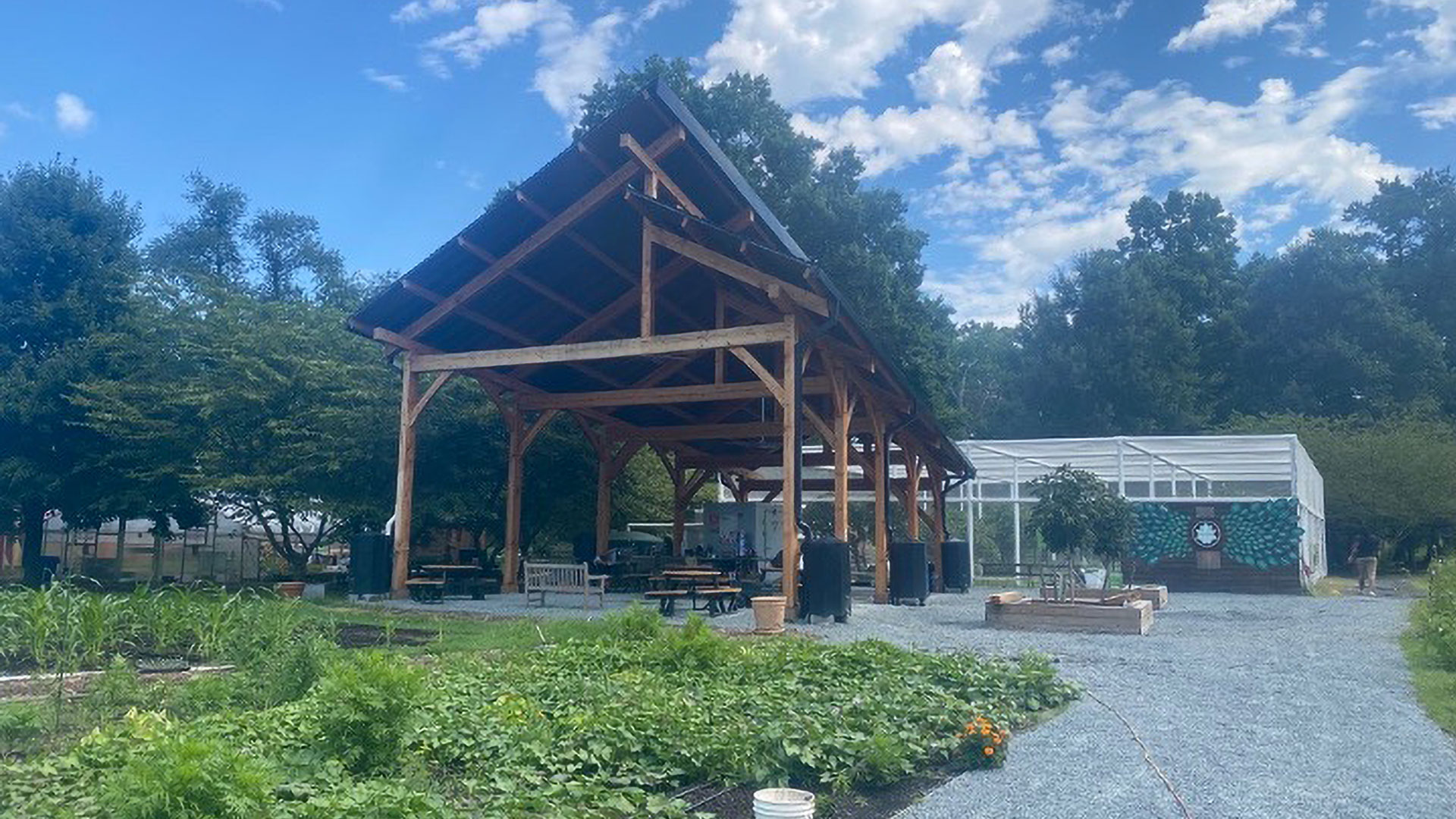
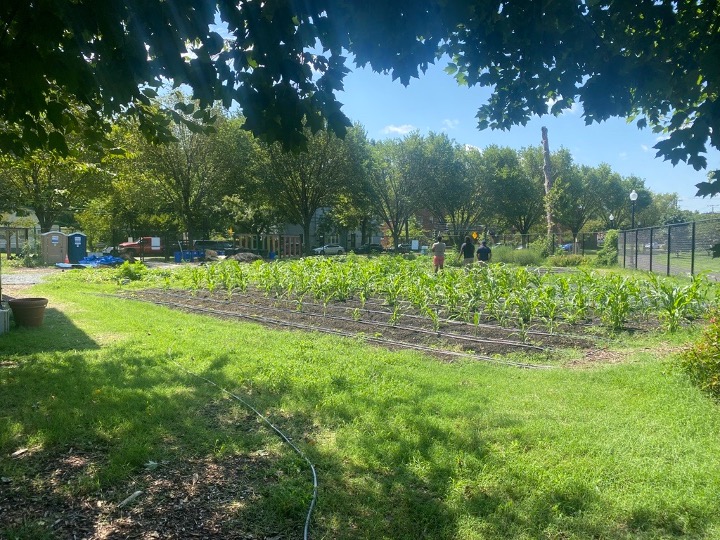
The Well at Oxon Run, DC Greens’ urban farm located in Southeast DC
“Advancing health equity by building a just and resilient food system,” is the powerful mission statement which drives DC Greens, one of Sol Systems’ newest community partners. DC Greens is a Black-led, multiracial organization actively making healthy and local food accessible to underserved DC communities.
Sol Systems is partnering with DC Greens as a part of the Sol Profit Share initiative. Sol’s Solar Renewable Energy Certificates (“SREC”) aggregation customers can select a Sol Profit Share contract which provides customers with a guaranteed, fixed payment per SREC, plus, additional profit when SREC prices rise. In conjunction, Sol Systems also donates five percent (5%) of its net Sol Profit Share profits to non-profit organizations working to support renewable energy access and sustainability. With the 2022 profits from the Sol Profit Share initiative, Sol Systems funds support DC Greens as they continue serving Washington, DC communities through urban farming and food education initiatives.
At “The Well at Oxon Run,” DC Greens’ farm in Southeast DC, the team cultivates crops, hosts nutrition education seminars, and fosters local engagement through volunteer opportunities. The Well’s farm staff utilize sustainable farming practices, including companion planting, rainwater capture, and natural pest management, indicative of DC Greens’ commitment to local environmental stewardship. The crops grown at The Well are packaged into produce boxes and distributed to community members, an initiative strengthened by DC Greens’ collaboration with Capital Area Food Bank. Additionally, the team spearheads a Produce Prescription program to enable doctors to prescribe fresh fruit and vegetables to patients experiencing diet-related, chronic illnesses. The program has supported over 1,400 adults and 900 children on Medicaid to access healthy food through participating grocery stores – reflecting DC Greens’ efforts to advance health and wellbeing through nutrition.
Squash, beans, and corn grown using the “Three Sisters,” companion planting method
Through the 2022 Sol Profit Share funding, DC Greens will purchase a growing season’s worth of compost, soil, and woodchips to ensure The Well can remain a productive hub for crop cultivation. Already, both DC Greens and Sol Systems use services from Veteran Compost, a locally run, veteran-owned business. Sol Systems sends food waste from our DC office to Veteran Compost’s processing facilities, and DC Greens purchases compost to enrich the growing soil; this transformation of waste to fresh food between the three organizations will continue in future years.
Overall, Sol Systems is looking forward to continuing to engage DC Greens and their farming operations at The Well. Sol’s SREC Profit Share customers have helped make the community partnership opportunity possible, advancing Sol Systems’ ambition to create impact through infrastructure and local collaboration. To learn more about how DC Greens is supporting a sustainable and resilient food system in the Washington DC area, please visit their website at: dcgreens.org.
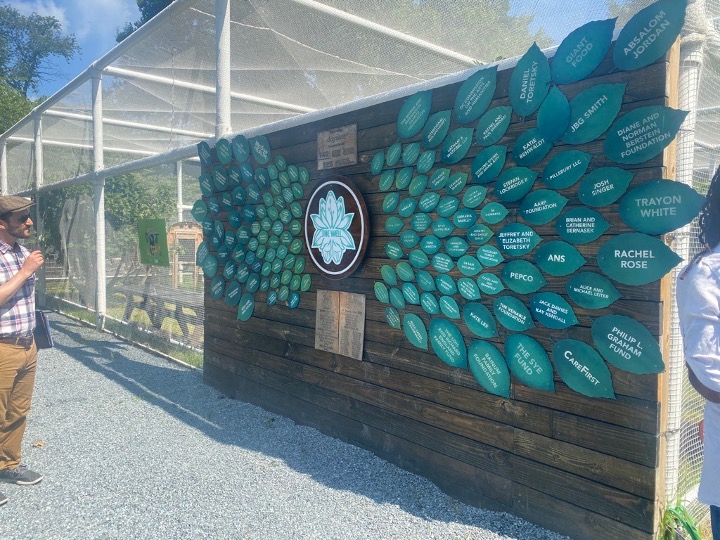
The Well’s “Donor Wall,” highlighting their strong network of community support