A Breakthrough Year for Agrivoltaics at Sol Systems
Blog |
By The Sol Systems Team
2025 marked a pivotal year for agrivoltaics—the practice of simultaneously using land for both solar energy generation and agricultural purposes—at Sol Systems.
Our teams have been focused on understanding and demonstrating how solar infrastructure can complement agriculture. This year, that work accelerated across our portfolio, advancing a vision where clean energy and productive land use operate hand in hand.
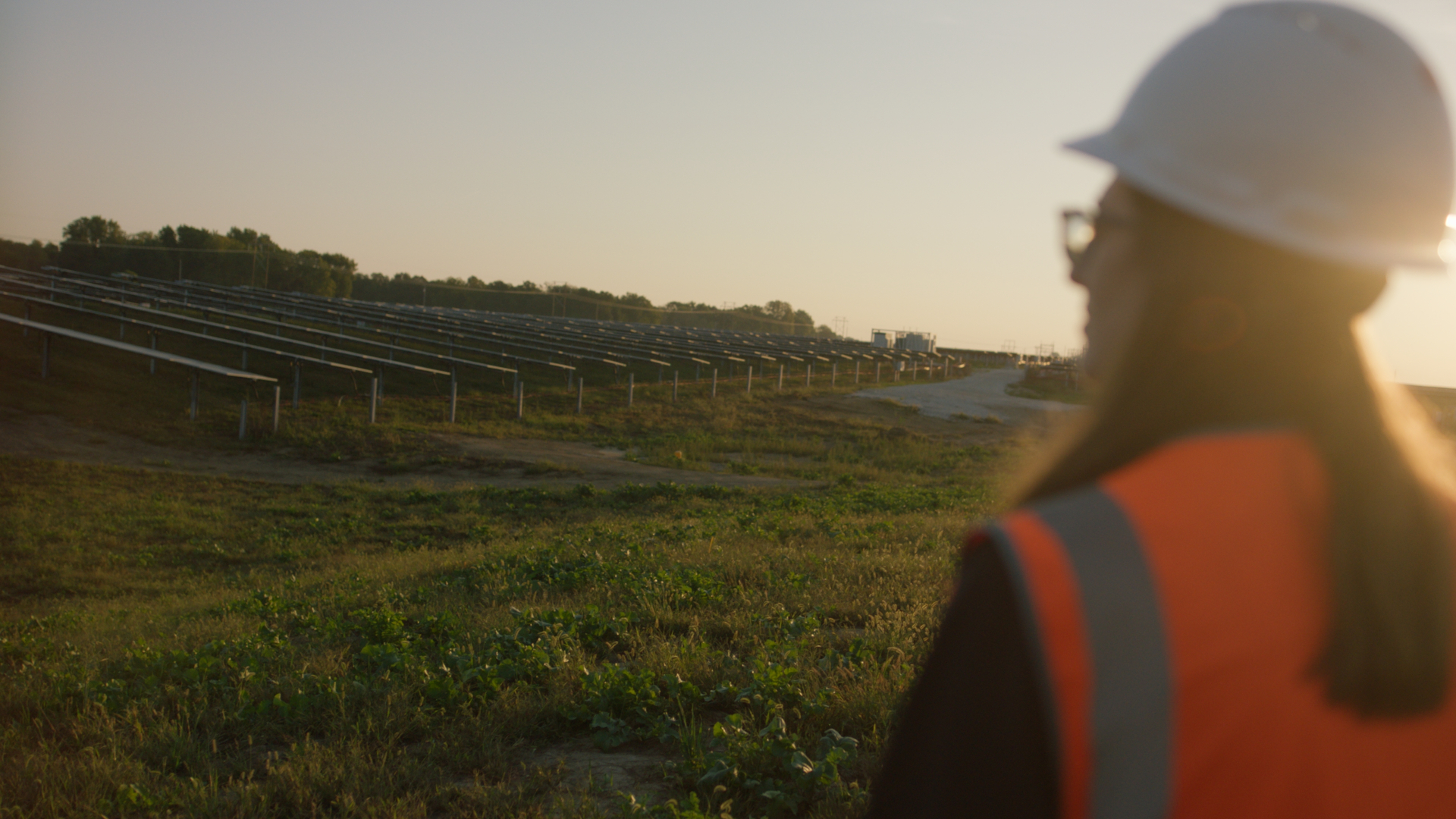
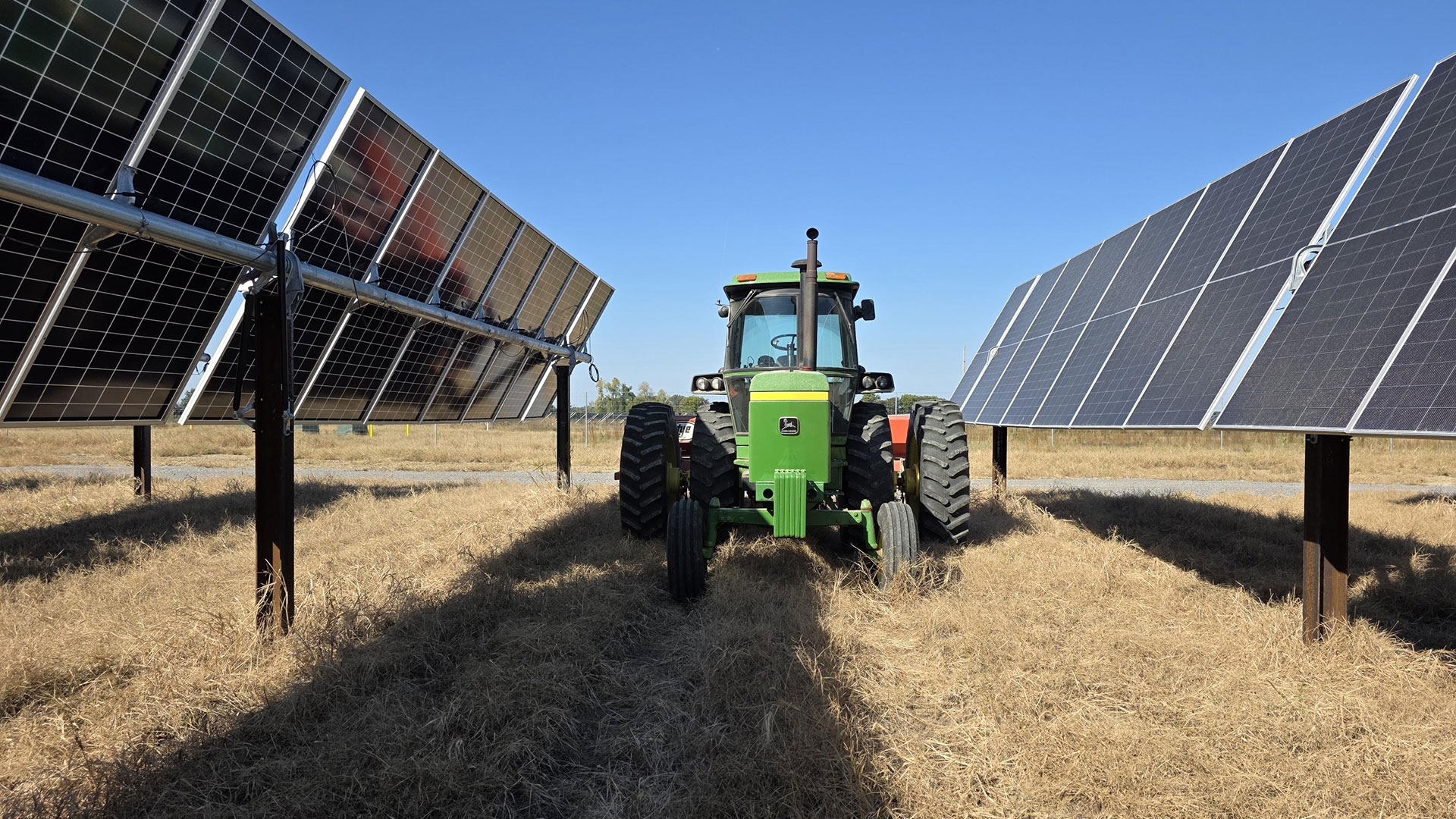
At our Prairie Creek project, we launched sheep grazing to support vegetation management while providing a secondary revenue stream for local producers.
At our Eldorado site, we also planted Kernza®, a deep-rooted perennial grain, creating one of the largest row-crop agrivoltaics projects in the country. Kernza® is a perennial grain developed by The Land Institute in Salina, Kansas. Unlike annual grains like wheat, which must be replanted each year, Kernza’s deep roots stay in the ground year after year, reducing inputs and tillage, protecting soil health and water quality, and capturing carbon deep underground.
Our research partnerships continue to deepen, too. Through ongoing collaboration with the American Farmland Trust, we enhance our understanding of soil health, land restoration, and long-term ecological impacts of solar development. Together, these efforts helped us better evaluate how strategically designed solar infrastructure can restore land, support farm operations, and generate lasting community value.
As we look ahead to 2026, Sol Systems is entering the next chapter of this work. In the coming year, we will harvest and process our first Kernza crop, marking a significant milestone in the economic and environmental potential of perennial grains on solar sites. We also will establish new specialty-crop pilot plots in collaboration with FoodWorks, enabling the production and distribution of fresh produce grown directly on our sites. These pilots will help us design models that support local food systems while maximizing land productivity.
Clean energy infrastructure has the potential to deliver long-term value for the communities and landscapes where we operate. The progress we made this year brings us closer to that future, and we look forward to expanding this work in 2026 and beyond.
From Learning to Leadership: How STEM Education Is Powering the Clean Energy Future
Blog |
By Anna Toenjes
By Anna Toenjes, Associate VP of Impact & Business Development, Sol Systems
When we think about what it will take to truly transform our energy system, we can’t just picture solar panels and transmission lines. It’s sixth graders racing tiny solar cars in a school gym, a robotics club meeting after hours in a rural county where opportunities sometimes feel far away, and kids crawling through an electric truck’s gear tunnel, asking a million questions.
Our recent community impact webinar, From Learning to Leadership: Building America’s Clean Energy Future Through STEM Education showcased that mix of curiosity, access, and hands-on learning when two incredible 4-H leaders: Aaron Dufelmeier in Morgan County, Illinois, and Taylor Hartman from Stokes County, North Carolina joined members of the Sol team to explore how early exposure to STEM education can prepare a new generation for leadership in the energy industry. Together, we unpacked how large-scale clean energy projects can seed local STEM opportunities and build the workforce our future grid will depend on.
Infrastructure + ImpactTM , by Design At Sol Systems, we talk a lot about “Infrastructure + Impact.” As Adaora Ifebigh, Senior Director of Community Impact at Sol Systems shared during the webinar, it really is as simple – and as ambitious – as it sounds. “If we’re going to build the clean energy infrastructure this country needs, we must also ensure that host communities share in the benefits.”
Energy, historically, has been extractive. Power – literally and economically – has often been taken from one place to serve another. Our mission at Sol is to help rewrite that story.
For us, that means asking:
Who is hired to build and maintain these projects?
How are we being good stewards of the land while our projects are there?
What future pathways are we creating for young people who grow up alongside this infrastructure?
That’s where STEM education – and our partners – come in.
A STOKE'd for STEM camper explores the gear tunnel of a Rivian truck in Stoke County, North Carolina.
Inspiring the Next Generation of Clean Energy Workers Clean energy development, installation, management, and innovation needs a workforce, from technicians and engineers to project managers, agrivoltaics specialists, and educators. We don’t have to – and we shouldn’t – wait until post-secondary education to start that conversation with today’s students. That’s why Sol Systems seeks out trusted community partners who already have deep roots in communities where our projects are located. In this case, that’s 4-H.
Taylor, who grew up in North Carolina 4-H and now leads 4-H in Stokes County, admitted she wasn’t originally a “STEM person.” But she saw the demand from local kids and the lack of resources in schools for robotics programs.
Through our work with Erik Nielsen and his team at Rivian, her team launched:
A solar-and-robotics summer camp that included a visit to a local solar site, hands-onsolar car builds, and an EV vehicle demo.
A new 4-H robotics club that now meets monthly, using kits purchased with the grant.
In Illinois, Aaron and his team leveraged our partnership to revive and scale a Junior Solar Sprint curriculum statewide.
With Sol-funded materials, they:
Trained 4-H youth development staff to deliver solar curriculum.
Worked with a local middle school where 24 eighth graders spent nine sessions learning how photovoltaics work, designing and building solar cars, and racing them in front of the entire school.
After the program, half of the students expressed interest in careers in solar or engineering, and 75% said they now see the importance of clean energy for electricity generation. That’s not just abstract “awareness.” That’s kids starting to picture themselves in this transition.
The Speed of Trust None of this happens overnight. Aaron joked that patience has been key; conversations with the Sol team started a few years ago. Taylor admitted that when a DC-based solar company (Sol) first emailed “little Stokes County,” her first reaction was, "Why us?
What changed things for Taylor was trust:
Rivian's Ted Foos helps a 4-H camper build a solar-powered racecar at NCSU 4-H Extension's STOKE'd for STEM summer camp.
Understanding Sol Systems’ ethos with 18 years of experience
Seeing concrete examples from other communities, like Morgan County, IL which started Seeing concrete examples from other communities, like Morgan County, IL which started
Being invited to co-design the programs based on what their youth needed most
As Adaora likes to say, “You can only proceed at the speed of trust.” We bring ideas and resources, but local partners know their communities best. Our most successful programs are the ones where we listen first and adjust our plans accordingly.
One theme that resonated with both Taylor and Aaron was the call to get comfortable being uncomfortable. Taylor embraced STEM programming she wasn’t originally versed in, growing and learning together with her students. Aaron encouraged other nonprofits not just to ask “Why?” but “Why not?” when new partnership opportunities appear.
Ultimately, that’s the heart of this work. Sol is asking communities, companies, and kids to imagine a different kind of energy system: one that is cleaner, fairer, and more deeply rooted in local opportunity. If this is what “learning to leadership” looks like after just a year or two of collaboration, we can’t wait to see what these communities build next.
Deep Roots Farm: Equitable Pathways to Regenerative Farming
Blog |
By Henry Yusem
Sol Systems (Sol) is proud to support Deep Roots Farm through the Sol Profit Share initiative. This program has allowed solar energy system owners participating in Sol Systems’ Solar Renewable Energy Certificates (SREC) aggregation solutions, including homeowners, businesses, and institutions, to choose a Sol Profit Share contract. With this contract, customers have received a guaranteed fixed payment per SREC, and they’ve also shared additional profits when SREC prices increase. Additionally, Sol donates 5% of the net Sol Profit Share profits to non-profit organizations that support renewable energy access and sustainability efforts. Previous recipients of Sol Profit Share include DC Greens and A Farm Less Ordinary.
With the 2024 proceeds from the Sol Profit Share initiative, Sol is supporting Deep Roots Farm’s work serving under-resourced communities in Washington, DC and Prince George’s County, MD with sustainably grown produce.
A Dual Mission
Deep Roots Farm is a Black woman-owned and operated farm located in Upper Marlboro, MD that is focused on practicing regenerative, holistic, and humane agriculture. The farm uses regenerative farming techniques to help both mitigate and adapt to the effects of climate change. By farming in a conscientious manner, they are able to regenerate topsoil, promote biodiversity, and conserve water, improving the resilience of local food systems.
In addition to implementing sustainable farming practices, Deep Roots Farm supports local communities by providing fresh produce and creating educational opportunities for people who may not have access to otherwise. Residents in the greater DC area can buy produce from Deep Roots Farm at local farmers' markets or through their Community Supported Agriculture (CSA) program. A CSA provides members with weekly baskets of seasonal goods while giving farmers steady income and stronger connections with the community. Deep Roots Farm donates any unused CSA produce to local organizations.
To further their educational impact, Deep Roots Farm offers tours to local school groups to teach them about regenerative agriculture. In the future, the farm plans to offer trainings on sustainable farming techniques to cultivate the next generation of Black, Indigenous, and People of Color (BIPOC) farmers. Deep Roots Farm is one of the just 1.4% farms in the United States which are Black owned and is working to introduce more BIPOC individuals to farming.
Taking Action
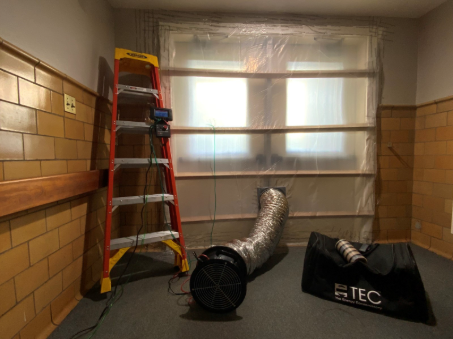
Deep Roots Farm plans to use their Sol Profit Share funding to insulate their barn for the winter, decreasing the farm’s monthly energy consumption—one of the highest monthly expenditures for the farm—, simultaneously lowering its climate impact and increasing its cost savings. Grant opportunities to offset higher electricity prices are sparse due to the cancellation of the US Department of Agriculture’s “Climate Smart” program. Sol’s donation provides an alternative source of funding to help Deep Roots Farm minimize this impact and continue to work on their sustainability projects.
To learn more about how Deep Roots Farm is practicing sustainable agriculture and impacting their community, please visit their website at: https://www.deeprootsfarm.us/.
Opening Doors to Opportunity: Jacksonville Promise and Lincoln Land Community College
Insights |
By Catherine Heiger
Our Prairie Creek Solar Project in Morgan County, Illinois, reflects our vision that renewable energy projects should generate lasting community benefits. Our Impact partners, now a year into their funding, create local jobs, support education, and strengthen the future workforce. Two of our impact partners, Jacksonville Promise and Lincoln Land Community College (LLCC), are helping turn that vision into reality by making higher education more accessible for local students.
One of those students is Addy Blimling, a second-year LLCC student and Jacksonville Promise scholar from Murrayville, IL. A graduate of Jacksonville High School and former volleyball player, Addy is exploring her passion for communications through an internship with her local electric cooperative—an experience that reflects the many ways renewable energy projects like Prairie Creek contribute to opportunity and career growth within the region’s energy economy. There, she supports member services and social media efforts—including managing their TikTok page and assisting with graphic design projects. After completing her associate’s degree at Lincoln Land, she plans to transfer to a four-year college to study Marketing.
For Addy, the Jacksonville Promise scholarship has been truly transformational.
“College can be so expensive, and this scholarship lifted a huge financial burden,” she said. “It’s allowed me to focus more on my studies and my future instead of worrying about how to pay for school.”
Through the support of Jacksonville Promise and LLCC, Addy has been able to stay local, pursue her degree affordably, and explore career paths that connect her education to her work experience.
“Lincoln Land gave me the chance to explore my options and make smart financial decisions,” she shared. “After graduation, I want to stay in this area and give back to the programs that have supported me.”
By expanding access to higher education and workforce training, Jacksonville Promise and Lincoln Land Community College are helping shape the future of Jacksonville, IL. Sol Systems is proud to support their efforts to equip students with the knowledge and skills needed to build a stronger, more resilient region.
Welcome to Saline County: Introducing Our New Community Impact Partners!
Insights |
By Catherine Heiger
At the Eldorado Solar Project Community Celebration on Thursday, September 25th, Sol Systems (“Sol”) announced to its project partners and the local community members in attendance the first group of community partners in Saline County, Illinois, home of our Eldorado Solar Projects. These partnerships build on the foundation set in 2021, when we launched one of the country’s largest power purchase agreement partnerships. It was groundbreaking not only for the size of the partnership, but the level of commitment behind it: a promise to build long-term investments for communities like Saline County. From the beginning, Sol Systems has focused on working with trusted local organizations--those who know their communities best—to create initiatives that directly benefit these areas and ensure all communities can take part in shaping America’s energy future. By listening to local voices and supporting community-led efforts, we’re working to ensure the impact of solar power goes far beyond energy generated.
Since launching the partnership, we’ve supported a wide range of organizations in both rural and urban communities including Pennsylvania, Maryland, Virginia, Appalachia, Illinois, and Washington, D.C. This funding has helped communities lead efforts like energy efficiency and home repair programs, build solar-plus-storage resilience hubs, offer job training and education, and provide wrap-around support for those who need it most. These efforts reflect the power of community-led solutions and the importance of meeting people where they are.
Now, as more of our solar projects move into operation, we’re deepening our focus on investing directly in the communities where those projects are based. Building on the launch of our community impact program in Morgan County, Illinois, we’re proud to add partnerships with local organizations in Saline County that share our commitment to building resilience and supporting sustainable, long-term growth. The initiatives being implemented with these local organizations are framed around addressing education, workforce development, energy efficiency, agriculture, and food systems needs. Our goal with these partnerships is to build a foundation of strong connections between our partners, their community, and our solar project in a way that creates a lasting impact on Saline County.
Faith in Place (Southern Illinois)
Since 1999, Faith in Place has empowered people of diverse faiths and spiritualities to be leaders in advancing environmental and racial justice, providing resources to educate, connect, and advocate for healthier communities throughout Illinois, Indiana, and Wisconsin. The organization advances its mission through five program areas: energy & climate change, sustainable food & land use, water preservation, environmental advocacy, and youth empowerment.
Sol’s partnership will support energy efficiency programs for low-income and community serving organizations. The initiative will conduct energy audits for the community serving organizations, guiding them toward action and upgrades aligned with their priorities enabling them to reduce their facilities’ energy usage over time. Faith in Place will also support an overarching community engagement project that could include installing energy efficient mini-splits, refrigerators and other energy efficient upgrades at a tiny home or homeless shelter in Saline County.
Prairie Rivers Network
Since its inception, Prairie Rivers Network has consistently used grassroots organizing and advocacy to protect the rivers and streams of Illinois including advocating for the full enforcement of the Clean Water Act to reduce water pollution and protect fish and wildlife habitats.
Sol’s partnership will help to create programming to support frontline coal communities in Illinois through the transition to a clean energy economy and engage with communities on the importance of native habitat. Specifically, enable Prairie Rivers Network to establish and implement a community energy education program to increase awareness and utilization of energy opportunities – solar, energy efficiency, electrification & energy audits for low and moderate income (LMI) communities (residents & small businesses), ensuring they can save money and contribute to a sustainable future. Additionally, the partnership will also develop an environmental education program for Saline County schools that builds a deeper connection with ecological systems, increases education around the environment, the importance of native plants and habitat protection.
Food Works of Southern Illinois
Food Works is a non-profit organization dedicated to creating a sustainable food economy in Southern Illinois. Food Works serves the 23 southernmost Illinois counties and, at times, bordering areas in Missouri, Kentucky, Indiana, and Arkansas. Since 2008, Food Works has provided training and support for new and existing growers, along with consumer education that helps people connect with local food and farming.
Sol’s partnership will enable Food Works to establish an incubator farm for demonstrating dual land use projects on solar sites (agrivoltaics) and expand the Food Works mobile farmers’ market in Saline County. The initiative aims to train beginning or transitioning farmers in sustainable practices, marketing, and producing food for local markets. It will also create a pipeline of farmers for the Incubator Farm, i.e. the mentees could go on to become mentors and work to address food insecurity in Saline County by expanding their mobile farmers’ market to new areas in Saline County.
Eldorado High School
Eldorado High School, part of Community Unit School District #4, in Eldorado, Illinois, serves a diverse student population in a rural region of southern Illinois. Approximately 70% of students qualify for free or reduced-price meals, highlighting the community’s significant economic challenges. Despite these obstacles, Eldorado High School remains committed to providing a high-quality education that supports all learners.
With Sol’s contribution, the school aims to establish a state-of-the-art hydroponic greenhouse cooperative. This initiative will provide hands-on learning experiences, real job skills, and fresh produce for the school lunch programs. This project would allow Eldorado High School to have one of the most advanced hydroponic cooperatives in the nation and help to establish the gold standard for a hands-on learning environment that allows students to learn how to grow food and plants, give back to the community, and provide for the nutritional needs of the school and community.
University of Illinois Urbana-Champaign (Saline County Extension 4-H program)
The Saline County Extension is the affiliate of University of Illinois Urbana-Champaign that serves Gallatin, Hamilton, Hardin, Pope, Saline and White Counties in Illinois. Through extension, land-grant colleges and universities bring vital, practical information to agricultural producers, small business owners, consumers, families, and young people.
With Sol’s contribution, Saline County Extension will create new 4-H programming and expand access to 4-H groups for youth in the region. The new 4-H program will offer youth a new community experience that focuses on exploring agriculture and natural resources, food nutrition and the environment. The partnership includes fee sponsorship, targeted outreach/enrollment to under-resourced communities and assist all participants with career exploration and development. Extension will also implement hydroponic garden towers in partnership with local schools such as Eldorado High School, community organizations and as demonstration to support implementation of eco-friendly food sourcing.
Southern Illinois Community Foundation
Southern Illinois Community Foundation (SICF) is a community foundation that serves the 17 southernmost counties in Illinois including Saline County. Its mission is to engage the people of southern Illinois in developing a tradition of philanthropy and to create an opportunity for donors to contribute to local community development efforts to address the varying needs of the region.
To further amplify its commitment to the region, Sol will develop two funds. The first is a scholarship fund for graduating seniors, current students at 2–4-year colleges, universities, vocational and/or technical institutes, and non-tradition students who are residents in Saline and Randolph Counties where Sol’s current projects are located. The second fund will make grants to support community-based, community-benefiting non-profits and for-profit entities, including small businesses in the region. Grants funded through this initiative are intended to support programs that address programs such as efficiency & weatherization, energy access & resilience, STEM education / workforce Development, environmental Initiatives, among others, and provide wraparound and resilience support to community serving organizations.
Future Possibilities
We’re excited to support meaningful change through strong relationships with the people who live and work in communities such as Saline County. That is why our partnerships with local organizations are built on listening first and working together every step of the way. Our support goes beyond one-time donations; it’s a long-term investment in the people and a collaborative effort to build a better future together. As the Eldorado Solar Projects continue to grow, we’re committed to keeping local voices at the center of our work—ensuring our clean energy efforts reflect community priorities and values, protect the land, and create meaningful opportunities for years to come.
Building Community: Tilden Families Gather for a Day of Creativity and Learning
Blog |
By The Sol Systems Editorial Team
On June 12, the Tilden Village Hall hosted a cheerful and engaging birdhouse painting event that brought together children, families, and local volunteers for a morning of creativity and learning. Organized by Sol Systems, the owner of the Tilden solar project, with support from its construction partner McCarthy and the Tilden Public Library, the event aimed to involve youth from the Tilden and Sparta areas in a fun, hands-on activity while introducing them to the themes of renewable energy and land stewardship.
More than 30 children took part, painting wooden birdhouses that will be installed along the fenceline in and around the local solar project. They also learned how small actions—like providing shelter for birds—can make a positive impact on the environment. Designed to be simple and low-maintenance, the birdhouses served as a creative gateway to discussions about solar power and its connection to the natural world. Sol Systems team members prepared and tested the kits in advance to ensure they were ready for little hands.
Parents, grandparents, and volunteers joined in, creating a warm, intergenerational atmosphere. Pizza was shared, laughter filled the library, and children left with brightly painted birdhouses and big smiles.
The success of the event was evident in the enthusiastic response from the community. Many families expressed interest in future events, and the library noted the strong turnout. Plans are already underway for a possible follow-up event this fall.