


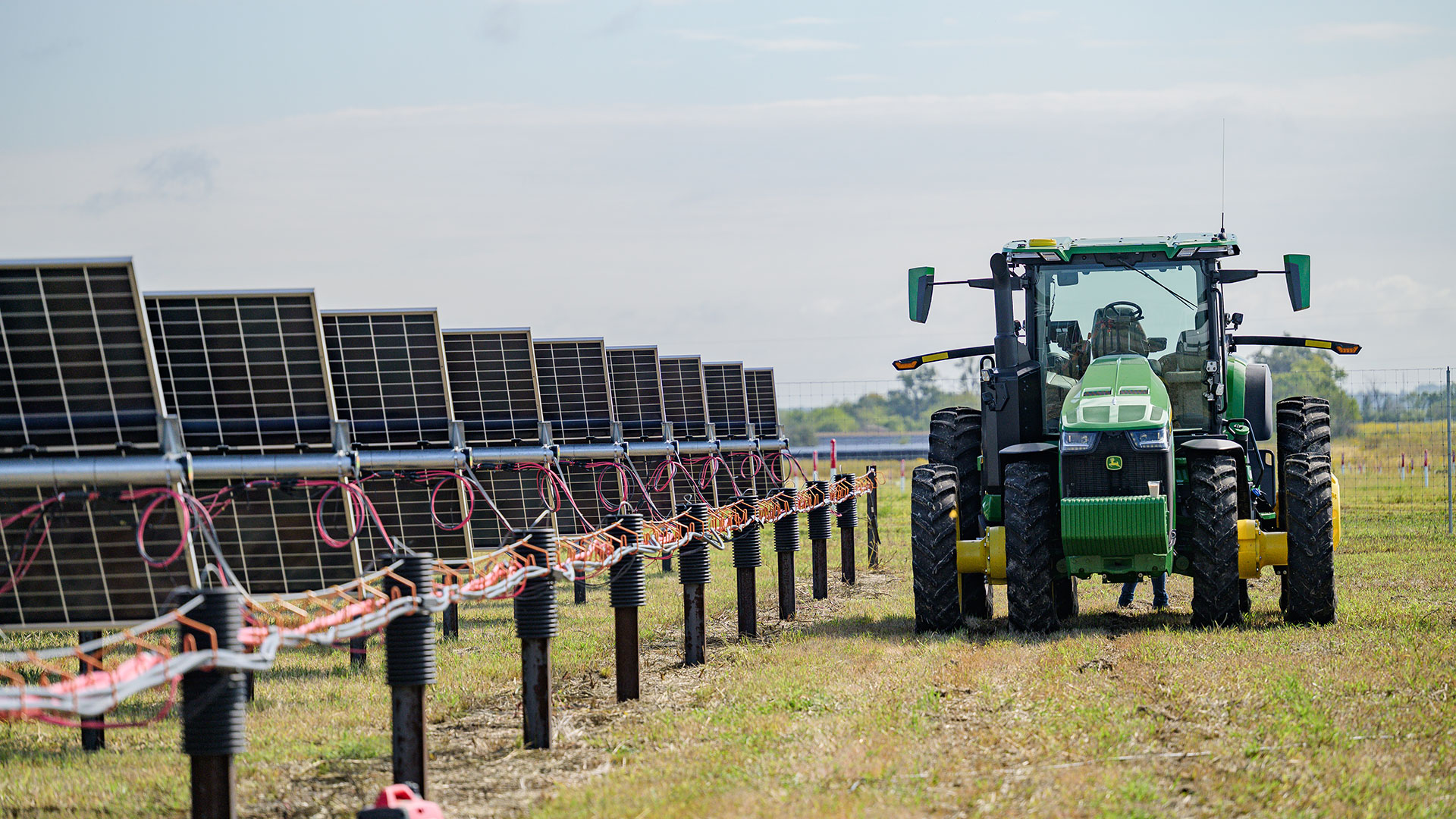
2025 marked a pivotal year for agrivoltaics—the practice of simultaneously using land for both solar energy generation and agricultural purposes—at Sol Systems.
Our teams have been focused on understanding and demonstrating how solar infrastructure can complement agriculture. This year, that work accelerated across our portfolio, advancing a vision where clean energy and productive land use operate hand in hand.
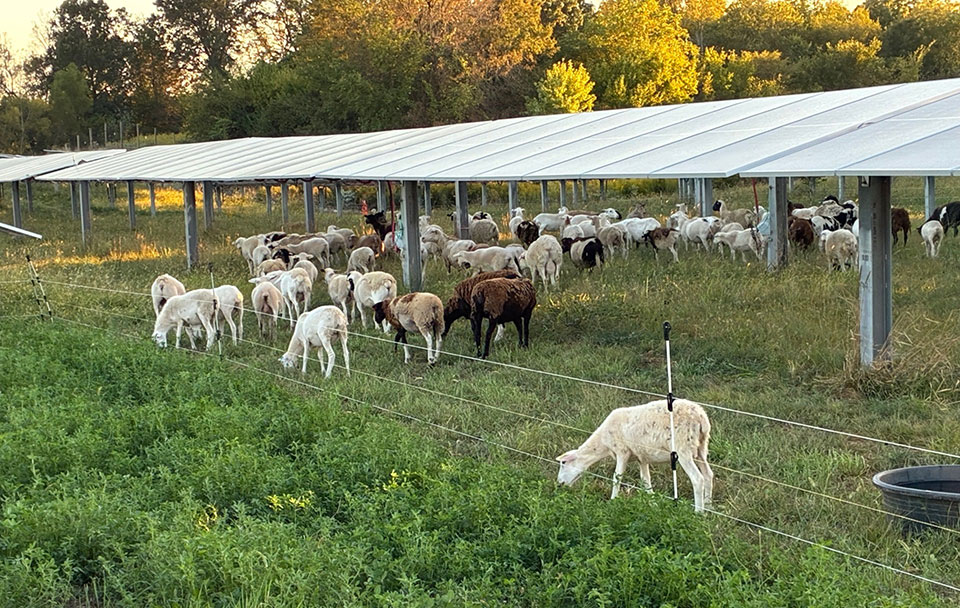
At our Prairie Creek project, we launched sheep grazing to support vegetation management while providing a secondary revenue stream for local producers.
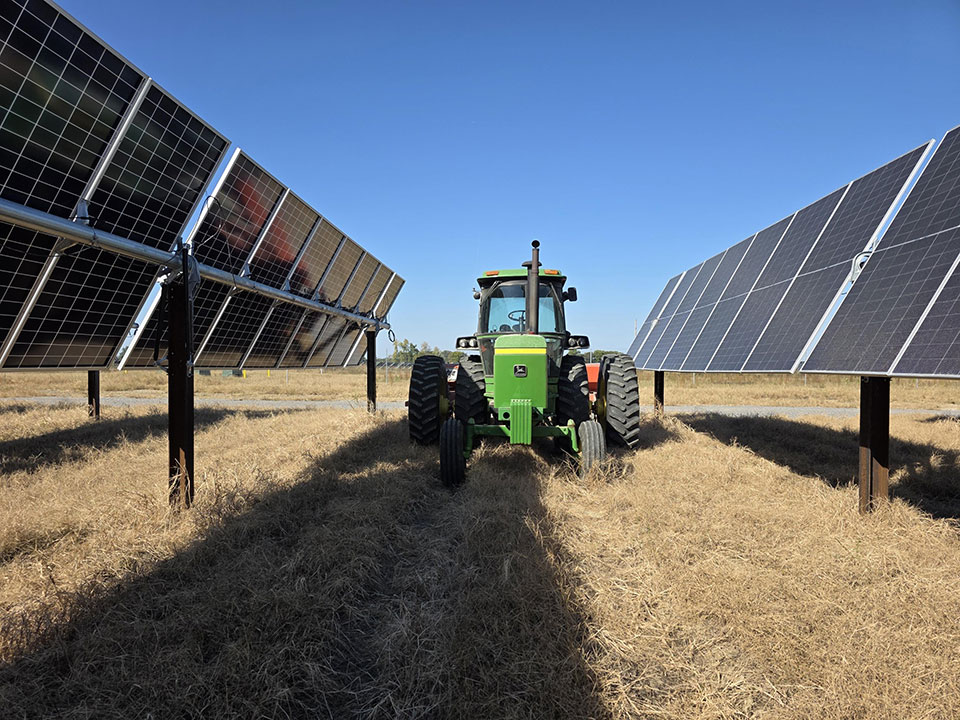
At our Eldorado site, we also planted Kernza®, a deep-rooted perennial grain, creating one of the largest row-crop agrivoltaics projects in the country. Kernza® is a perennial grain developed by The Land Institute in Salina, Kansas. Unlike annual grains like wheat, which must be replanted each year, Kernza’s deep roots stay in the ground year after year, reducing inputs and tillage, protecting soil health and water quality, and capturing carbon deep underground.
Our research partnerships continue to deepen, too. Through ongoing collaboration with the American Farmland Trust, we enhance our understanding of soil health, land restoration, and long-term ecological impacts of solar development. Together, these efforts helped us better evaluate how strategically designed solar infrastructure can restore land, support farm operations, and generate lasting community value.
As we look ahead to 2026, Sol Systems is entering the next chapter of this work. In the coming year, we will harvest and process our first Kernza crop, marking a significant milestone in the economic and environmental potential of perennial grains on solar sites. We also will establish new specialty-crop pilot plots in collaboration with FoodWorks, enabling the production and distribution of fresh produce grown directly on our sites. These pilots will help us design models that support local food systems while maximizing land productivity.
Clean energy infrastructure has the potential to deliver long-term value for the communities and landscapes where we operate. The progress we made this year brings us closer to that future, and we look forward to expanding this work in 2026 and beyond.